Story by Opinion Editor Zoebelle Bean
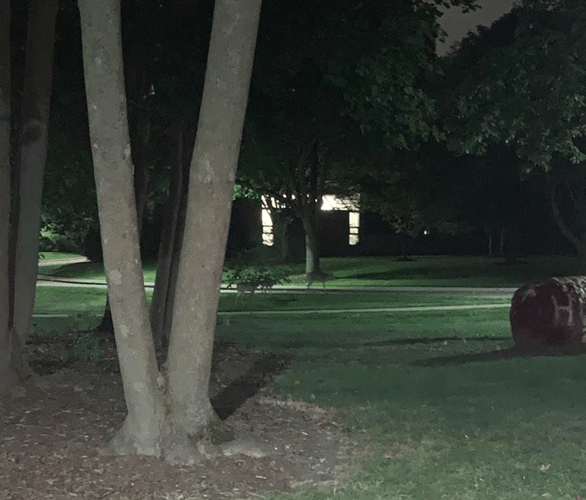
There’s a new presence on campus, but they’re not students- they’re deer. A whole family, to be exact. Though sightings have been random and fleeting, they appear to enjoy Aquinas and this campus. Coming out mainly at night and in the wee hours of the morning, this family of deer consists of a six-pointer (three points on each antler), a four-pointer (two on each), and several fawns. However, these deer appear to be new and, frankly, a little disoriented. This being their first year on campus, they can be bold. Oftentimes, they seem to come out of nowhere and appear before people when they least expect it, causing alarm from these unsuspecting students.
Freshman Jaidyn Alemany claims, “I only see them at night, and they scared me. I think they want to eat me.”
Are these deer friends or foes? Why did they choose our campus? A brief history of animal displacement might help clarify this situation. Before cities were built, animals had their choice of place to live based on the availability of food. However, when these animals lost their homes due to suburbanization, they needed to adapt, branching out into our communities. With no large, wooded area to live in, these deer saw the opportunity to populate our small, campus woods and took it. Honestly, we should be honored that they chose us over anyone else.
Yet, their presence remains a mystery. Are the deer here on nefarious terms, or were they simply relocated due to urban sprawl? Have they come to avenge their fallen cousin, hanging on the wall of The Moose? Some students claim the deer aren’t the sweet creatures they’re cracked up to be.
Image Courtesy of Mark Musgrave III
Freshman Cristiana Worthams describes how, “I saw them jump out of the woods during the tornado and it looked like they were up to no good. Definitely suspicious.”
Yet, optimism remains. These deer could be friendly if we approached them with kindness. While we may not know their exact intentions, some students enjoy having them around.
An anonymous Senior claims, “They are the protectors of the school. They’re cute.”
A flourishing, diverse animal population on campus is a good sign. Our plot of land is vibrant and sustainable for animal life. It’s a sign that our campus is healthy if it can provide food and shelter to a wide variety of animals.
The one thing we must remember is this: they come in peace. Antlers and all.

Photo courtesy of Mark Musgrave III


 The Saint