By Catholic Editor, Faith Addington
In comparison to the Protestant churches that practice two sacraments, the Catholic Church is one of the few that practices all seven sacraments. Each sacrament is a visible sign that imparts divine grace through a ceremony or ritual. These sacraments can be divided into three categories: the sacraments of initiation, the sacraments of healing and the sacraments of service. Through sacraments of initiation, one is given a share in the divine nature of Christ which not only strengthens one’s faith, but one’s ability to serve the Lord. There are three sacraments of initiation: the sacrament of baptism, the sacrament of confirmation, and the sacrament of the holy Eucharist.
Beginning with the first sacrament of initiation, baptism must be the first sacrament received because it cleanses one of original sin and makes one reborn as a child of God. Through baptism, we become members of the Church and the body of Christ. This practice traces back to the gospel of Matthew in which Jesus submits himself to the baptism of John, then later commands his disciples to “Go therefore and make disciples of all nations, baptizing them” (Mt. 28:19-20).
The second sacrament of initiation is confirmation in which one is sealed with the gift of the Holy Spirit and strengthened for service. It deepens the graces given from baptism, uniting one closer to Christ and increasing the gifts given by the Holy Spirit (Catechism of the Catholic Church, 1303). This sacrament originates from the gospel of John and Acts in which Jesus bestowed the apostles with the Holy Spirit so that they would proclaim the works of our Lord (Jn. 20:22, Acts 2:1-4).
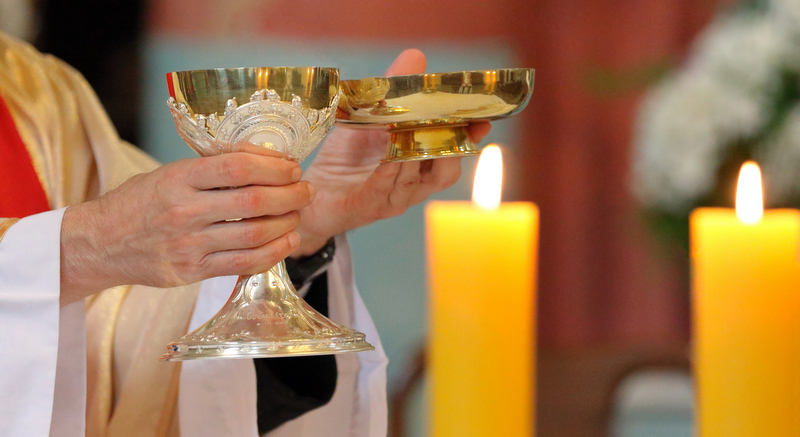
The third sacrament of initiation is the holy Eucharist, which is described as “the source and summit of the Christian life” because of the intimate bond of unity between Creator and creation. (Catechism of the Catholic Church, 1324). The Eucharist is celebrated by the consumption of the bread and wine that is transubstantiated into the true body and the true blood of Jesus Christ during the consecration. The Eucharist sustains the life of the soul through this consumption, leading to the coalescence of one’s body and Jesus Christ, making one more christified. This is why during the last supper, Jesus commands his disciples to “do this in memory of me” (Luke 22:19). The Eucharist is necessary for the soul.
While each sacrament is important for the soul, the sacraments of initiation can be considered the gateway sacraments towards the advancement of perfection; ultimately designed to create a likeness to Jesus Christ.



 The Saint
Leave a comment