
Story by Lillian Syren, Arts Guest Writer
“Sing God a simple song: Lauda, Laude…”
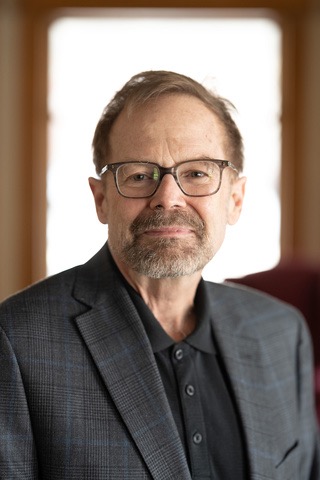
These opening words of “A Simple Song” by Leonard Bernstein come from perhaps the least simple musical work in existence. This song is an excerpt from Bernstein’s magnum opus: MASS. Commissioned by Jackie Kenney to open up the brand new John F. Kennedy Center in 1971, MASS: A Theater Piece for Singers, Players, and Dancers ignited a stark amount of controversy for the plethora of messages and sentiments contained within. In creating MASS, Bernstein sought to commemorate and honor the center’s namesake, America’s first Catholic president, by paying tribute to his faith and thus based it on the liturgy of the Roman Catholic Tridentine Mass. Aquinas College Music Department, through their College Chorus, is collaborating with Fountain Street Church under the direction of Austin McWilliams, a conductor at both Fountain Street and Aquinas, to perform MASS. College Chorus will be playing the role of the Ecclesiastical Choir, and the performance will be on April 27 at 7:30 p.m.
Where to begin with the controversies and historical context of the piece? To start on a secular level, MASS caused discomfort for its anti-war message, a violence that the U.S. was all too familiar with, especially with its involvement in the Vietnam War at the time. The Nixon Administration, already very hesitant about attending the opening of the Kennedy Center, advised the President not to go, the reason being that there was a secret message in Latin for him that would humiliate him. The line was simply “Dona nobis pacem”, meaning “Grant us peace”—incredibly telling of political turmoil in 1970s America.

Beyond war, America was also undergoing a major cultural change with the civil rights movements happening across the country in the 60s, and the political turmoil from them did not abruptly end at the start of a new decade. Alexander Bernstein, Leonard Bernstein’s son, said in a 2020 PBS interview, “My father always, of course, has been a champion of social justice, of peace. He put all of that into MASS. Also, he was a man of faith. He was very spiritual.” While MASS is in no way a literal Mass, as was Bernstein’s explicit intent, it does showcase the very real and pertinent struggle of spirituality and what it can demand. The work combines sacred and secular texts, using Latin, English, Hebrew, and even Greek to build on the foundation of the Tridentine structures and prayers. English lyrics interject throughout the piece, questioning and challenging the Mass itself, which emphasizes the spiritual struggle undergone by not only the “Street Singers” but also the main character, the Celebrant, who endures a broad spectrum of struggles. Musically, the piece incorporates jazz, gospel, folk, musical theater, and rock music, while also indulging in esoteric references to Beethoven’s Ninth and 12-tone serialism.
The other end of the controversy came from the Catholic Church and its members. At first glance, it seems highly sacrilegious and disrespectful: the piece has some very raunchy lyrics that appear to attack the faith, and at the end of the performance, the Celebrant smashes the chalice, spilling its contents everywhere. Though this is not a literal Mass and a legitimate chalice with consecrated wine is not spilled, it inevitably gives off a disrespectful and irreverent tone. Another huge historical content note was that MASS came out just a few years after the Council of Vatican II, which completely revamped the Catholic Church’s liturgy, vestments, practices, and overall spirituality. The Church transitioned from the Tridentine Latin Mass to the Novus Ordo Mass, a Mass said in English with a very different look and unfamiliar setup. To have this piece performed, seemingly mocking the Latin Mass, sent the Traditional Latin Mass supporters on a rampage: not only had their Church transitioned away from it, but now it looked as though it was being insulted and disgraced. Almost 20 years later, however, the Church extended an olive branch of peace and requested that it be performed at the Vatican in 2000 in celebration of the Church’s 2000th anniversary, per the request of Pope John Paul II. Though it was performed, props were kept to a minimum, and no smashing of chalices took place, leaving room for questioning about the Church’s approach and interpretation of MASS.
The piece was not meant to be enjoyed in passing;—it was meant to move the audience and shine a light on the darkest and most spiritually vulnerable parts of the soul. Jamie Bernstein, Bernstein’s daughter, commented in the 2020 PBS interview that “It’s about something complicated. It’s about a crisis of faith, my father’s crisis of faith, but also America’s crisis of faith.” The message of the piece was meant to resonate across the country with governments and individuals alike, and it did just that. The heart of this masterwork reflects Leonard Bernstein’s deepest gripes about institutionalized government and religion and his grappling with his own spiritual beliefs. Still, ultimately, per his program note from 1971, it serves as a “reaffirmation of faith”.
Bernstein, L. 1971. MASS, “A Simple Song”.
Levy, K. (2020, April 24). The Origin of Leonard Bernstein’s “Mass” | Great Performances | PBS. Great Performances. https://www.pbs.org/wnet/gperf/origin-leonard-bernsteins-mass-0a9c8g/11387/
The Kennedy Center. (2022). Leonard Bernstein’s MASS | Kennedy Center. The Kennedy Center. https://www.kennedy-center.org/nso/home/2022-2023/bernstein-mass/

 The Saint