
Article Written by News Editor Zoebelle Bean
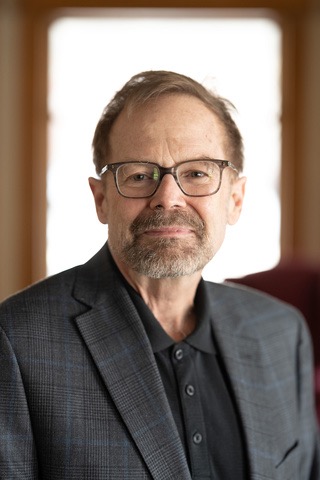
This year’s 27th Annual Wege Speaker Series was given by Sarah Jaquette Ray, who wrote a guidebook titled, “How to Keep Your Cool on a Warming Planet: A Toolkit for Climate Justice.” Ray is a Professor of Environmental Studies at Humboldt State University in Aracata, California, and she talked about climate anxiety and how it can be managed.
Ray’s talk was opened by President Alicia Cordoba, who acknowledged Peter Wege’s contributions. With sustainability at our core, President Cordoba spoke on behalf of the whole school when she claimed that we are proud to be a part of Peter Wege’s legacy.

Ray began her speech with a land acknowledgement, recognizing the unjust actions taken by white settlers to displace the native peoples and declaring her commitment to participate in indigenous efforts.
Ray claimed that her research began because something had shifted in her student’s lives and they didn’t appear to be learning content. Her students were feeling guilt as an impact of climate change because they felt complicit in the change. Climate problems were too big and interconnected for them to solve, and anything done in their lifetime wouldn’t amount to anything.
In 2021, Ray’s suspicions were confirmed on a national level: 60% of 10,000 surveyed 16-25 year olds from eight countries said they felt very or extremely worried about climate change. Understanding student’s emotional reactions to climate change became Ray’s central focus.
According to Ray, “We can’t change systems that make us unhealthy if we are unhealthy.”
The impacts of climate change were cyclical- it impacted our mental health, which in turn impacted our ability to address the crisis. Chronic stress caused by climate change caused changes in our brain chemistry and could result in anxiety. However, emotions dictate our decision-making skills. Suppressing these negative emotions fuels the issue.

Ray proposed several solutions to this psychological problem. First, we must obtain a justice-centered approach by paying attention to our emotions. Self-care is needed because we are all a part of a larger impact.
Secondly, ignoring negativity bias in the news and recognizing how our participation in news consumption contributes to a feedback loop will allow us to break free of always feeling despair from keeping up with the news.
Finally, Ray claimed that an awareness of the collective part of humanity diminishes alienation. We need to blame specific systems for the problem, not all of humanity. Good deeds won’t necessarily make the news, so if we find other people in our communities who think like us and find deeper connections, then we can find hope and empowerment.
Featured Image Courtesy of Aquinas College Instagram


 The Saint