
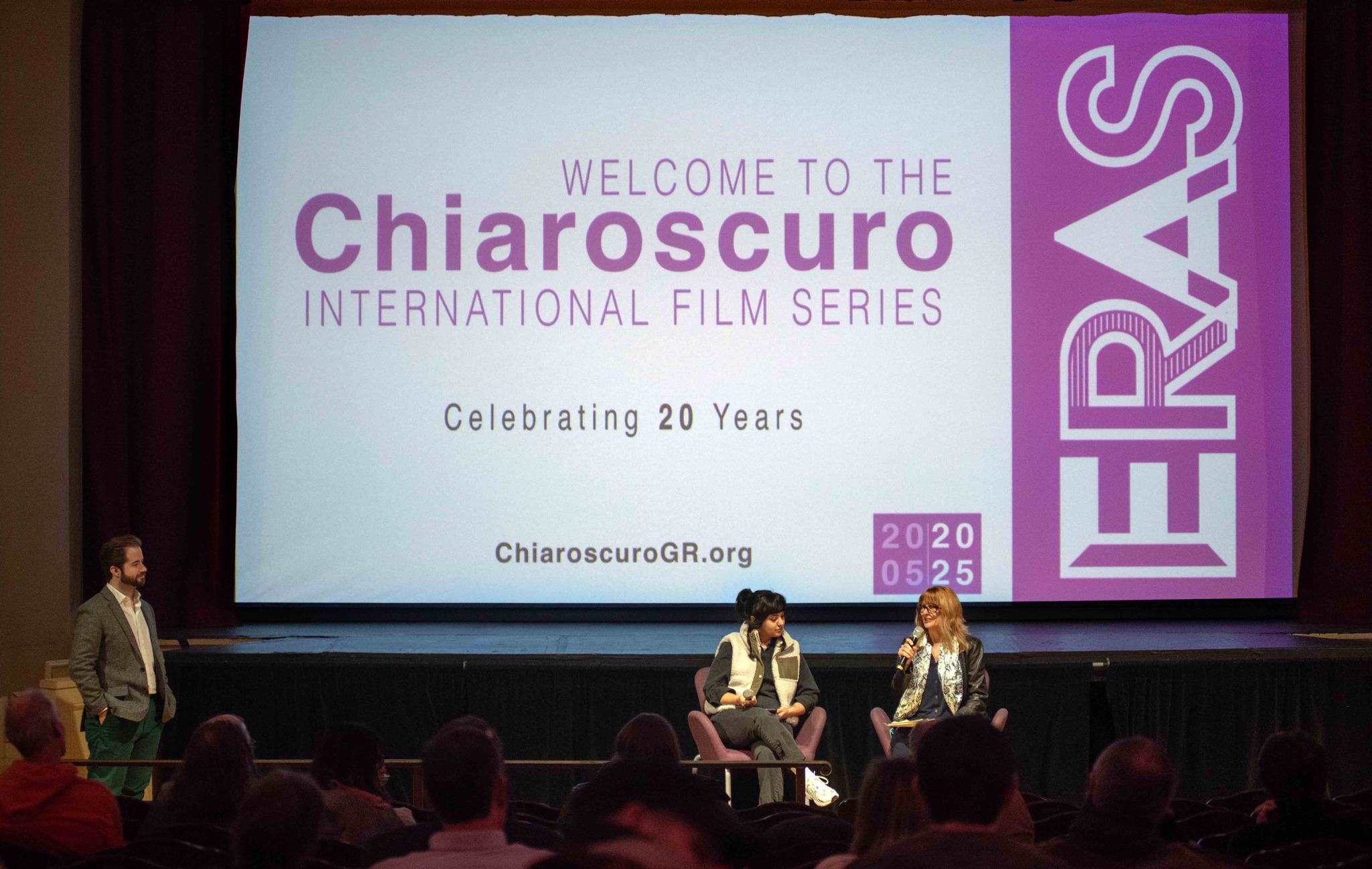
Chiaroscuro – Photo by Vice President of Chiaroscuro Dianne Carroll Burdick
By Joel Grimsley, Arts Editor
Viewers gathered on Jan. 19 at Wealthy Theatre for the premier of the 20th Chiaroscuro Film Series to watch a free viewing and discussion panel of the Iranium film Children of Heaven.
Chiaroscuro, an Italian artist term referring to light within darkness, is the name of this non-profit annual film series which is shown from January to March. It was founded by local educators and artists in 2005 who were inspired by the Toronto International Film Festival.
Less than a 20 minute walk from campus, the 100 year old Wealthy Theatre hosted the event.
Chiaroscuro presents five carefully selected international films, unified by a theme that highlights the diversity of the cultures involved. The films are shown in their original language but English subtitles are included, and after each screening there is a film scholar and a cultural representative that lead a discussion panel open to all to participate. Afterwards the experience continues with a reception that includes complimentary food, often from the culture that the film was from.
The goal of the film series is to connect diverse cultures and perspectives with provoking international films, many of which are award nominated and internationally recognized. The audience’s ability to learn and engage with cultural representatives is intended to foster a greater understanding of the human experience through these international Films.
Chiaroscuro’s 20th anniversary was celebrated by the rescreening of the 4 most popular films since its inception in 2005. The one exception will be the fifth and final film of the season: The Zone of Interest (2023).
Aquinas College is one of the many sponsors the non-profit requires for the continuation of the festival.
The first in the series was Children of Heaven, a film produced during the zenith of Persian cinema, it is described as part of a genre that was popular at the time called “Child Quest” according to Professor Toni Perrine who was the film scholar at the panel. She was accompanied by Iranian artists, actress and educator Mahsa Alafar, who was well familiar with the film, watching it when she was a child in Iran.
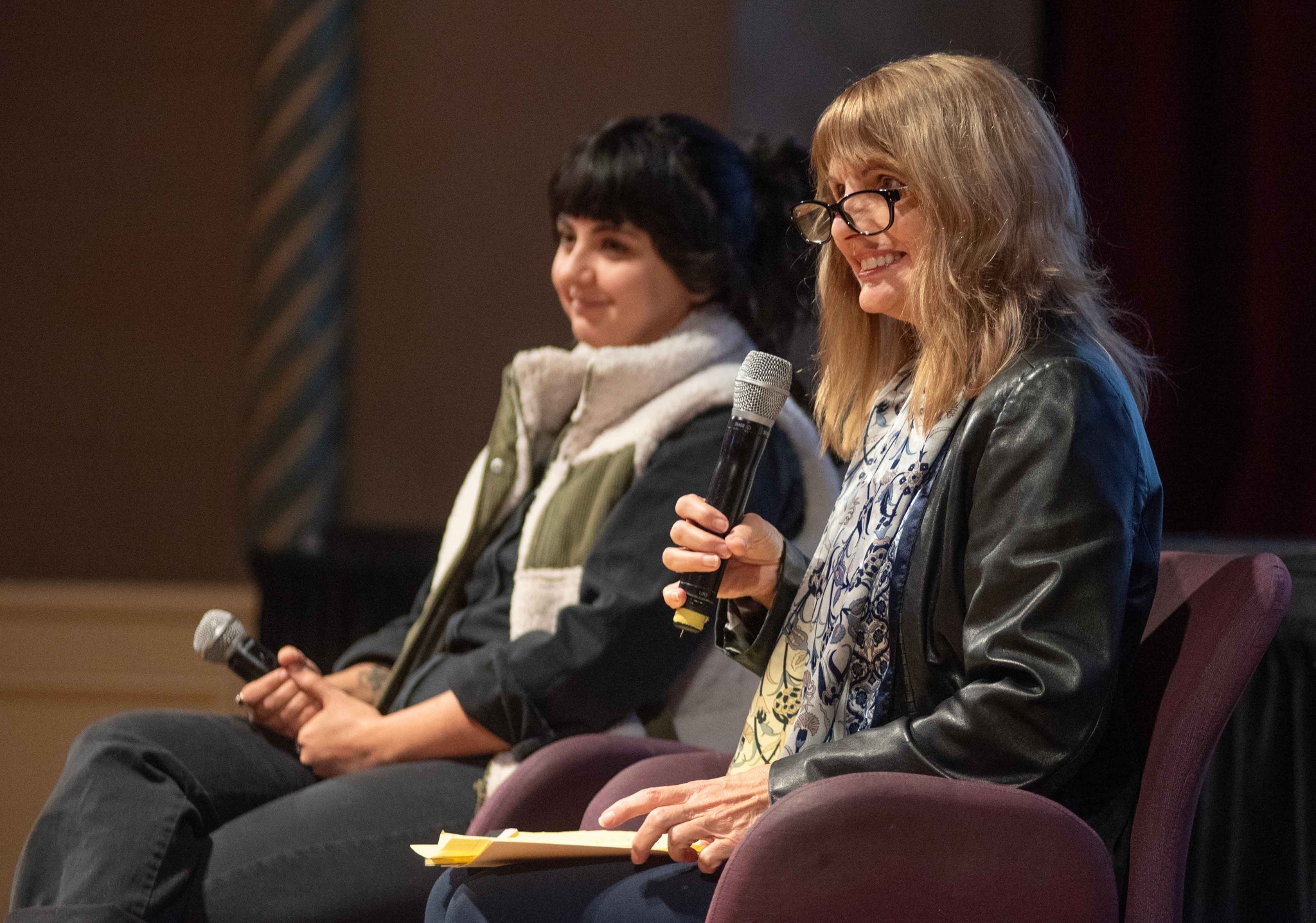
Alafar and Perrine answering questions from the audience at the after film panel – Photo by Dianne Carroll Burdick
The film was shot in 1996, post Iranian revolution, something Alafar stressed should be considered and how it could be interpreted as propaganda.
The budget of the film was extremely low, at the time only costing $180,000 dollars ($350,000 2024), yet was critically received both in Iran and internationally, being nominated for an Academy Award for Best Foreign Language Film in 1998.
The film was shown in its original language, Farsi (Persian), with English subtitles and was set and shot in Tehran, the capital of Iran. The entire movie used minimal editing and was composed of long shots with few cuts, rarely using music and close to no special effects in what Perrine described a “realist style.”
The leads in the film who were unprofessional children selected from schools in Tehran delivered a particularly engaging performance. Amir Farrokh Hashemian and Bahare Seddiqi. “One thing that I loved about the film was their interactions,” Perrine said at the panel after the film. “A lot of times their bond was expressed through the exchange of looks, relying on their facial expressions.” This lack of dialogue as visual storytelling created compelling characters for audiences to become attached.
The panel after the film was particularly interesting due to the conflicting reflections of the panelists and what the film meant to them. Alafar said that the film was perpetuating Iranian government propaganda, “using children to manipulate the audience’s emotions.” Whilst Perrine thought that children were used to evade censorship, expressing a more emotive relationship between the siblings.
The panel conversation focused mainly on whether art could be separated from its artists, with nuanced perspectives given from both Alafar and Perrine.
After the panel, the Mediterranean Island provided free baklavas and sohan, both traditional Iranian sweet treats, that both had pistachios. Also provided was an aromatic Persian tea.
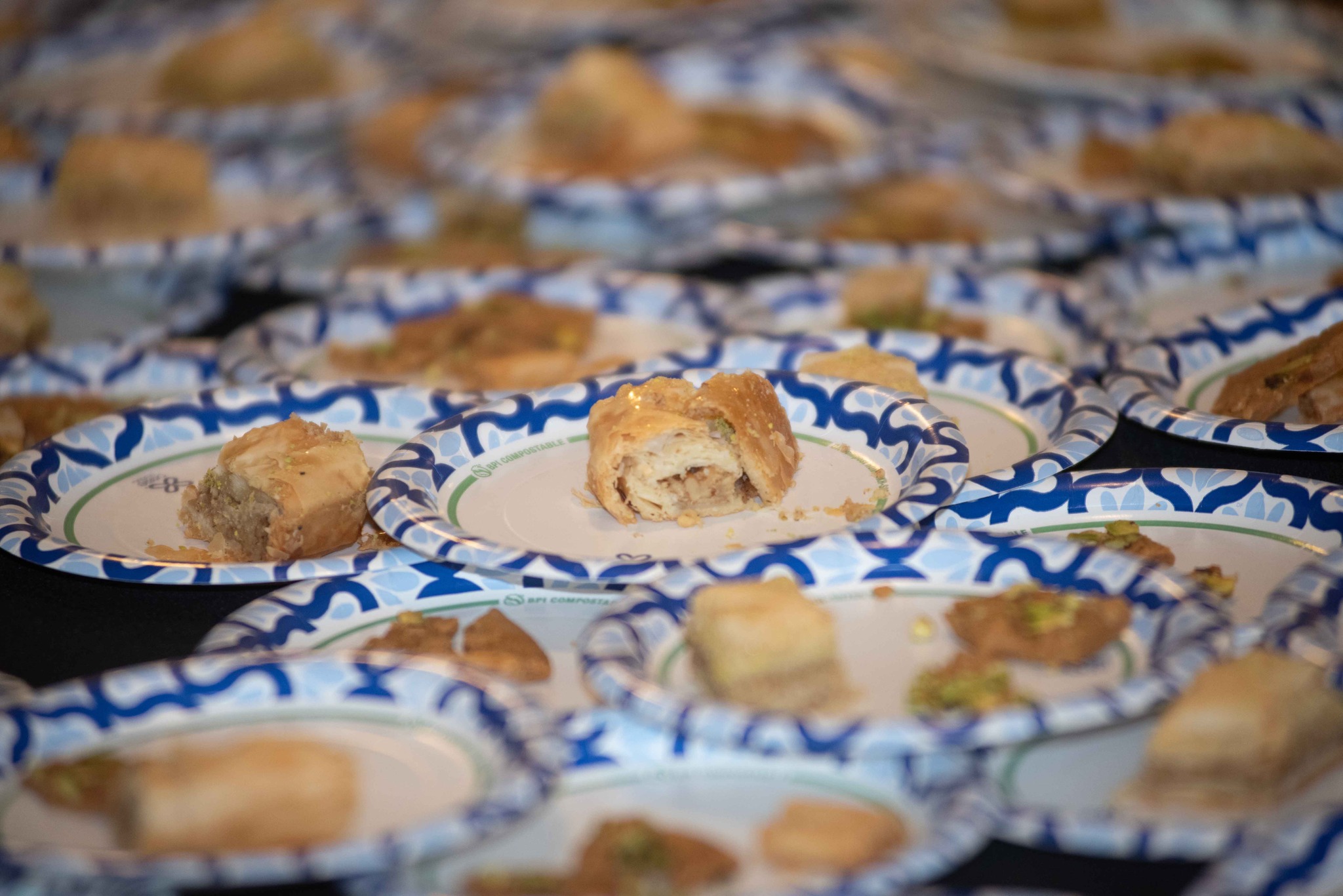
Baklava provided by the Mediterranean Island – Photo by Dianne Carroll Burdick
“I think the film was fantastic, the exposure to other cultures that this series brings to this community is something that can’t really be found,” sophomore Kyle Devine said, who attended the premier film showing.
Chiaroscuro’s next showing is close approaching, with the Estonian-Georgian film Tangerines being shown in Wealthy Theatre on Feb. 2. This 2013 Golden Globe and Academy Award nomination for best international film is about Estonian Tangerine Farmers waiting to harvest their tangerines while caring for two wounded soldiers who have sworn to kill each other.
The over films, including an film from Argentina (Wild Tales), Japan (Shoplifters) and finishing on March 16 with award winning The Zone of Interest. All films being show at Wealthy Theatre every two weeks on Sundays at 2 p.m.
Any student interested in film, or culture is recommended to visit for an enlightening afternoon, that costs nothing. ”I know I have friends that are planning on going with me” said Devine “Over the next few months I plan on going to all of them.”

 The Saint