By Anastasia Benstead, Assistant Editor-in-Chief
On Thursday Jan. 31, students, staff and faculty gathered in the Donnelly Center for an event called Menstruation Celebration, which entailed a viewing of the documentary “Periodical” and a question and answer panel session afterwards. The goal of the event was to reduce the stigma around women’s health and bodies, as well as normalize periods.
The Q&A was held anonymously via a google form. The goal of the anonymous method of question asking was to increase the number of questions being asked and to ensure that attendee’s questions were answered without shame.The questions were asked by student Lillian Houteman to the two panelists, Kayla Willard, Aquinas senior, and Nurse Kim Kruithoff, MSN RN of the Health Center. The event was co-sponsored by the Sociology Department, the Women’s & Gender Studies Center and the library.
“It was a great celebration,” Amy Dunham Stand, director of the women’s & gender studies program, said. “We were glad to have people come out to learn about menstruation through this documentary and discussion.”
Others shared in the feeling of success of the event. “I had several students come up to me later to tell me that they learned something,” Kruithoff said. She went on to discuss how successful she felt the event was. “I feel like anytime we can share information together in an environment conducive to learning, we are doing something beneficial.”

Donnelly in the snow- Photo by Abby Kozal
In terms of stigma, there are two common tropes in the US about periods. The first being that actively bleeding women are hysterical, and the second being that periods themselves are disgusting. These tropes, spread largely through popular media, exist for both men and women, often making it hard to discuss women’s health.
For example, even students like Grace Wilson who admired to growing up around parents who were very open about menstruation admitted that “In the past, I used to hide tampons or pads in my sleeve if I needed to go to the bathroom,” Wilson said,“but I’ve done my best to stop doing that. I shouldn’t have to feel embarrassed just because someone sees me walking to the bathroom with a tampon in my hand.”
“Periodical” is a 2023 documentary directed by Lina Plioplyte to discuss facts about menses, or menstruation. It includes commentary from a diverse range of ordinary women, gynecologists, social justice advocates and a few famous names as well, such as Gloria Steinum, co-founder of “HerMagazine” and Naomi Watts, Australian actress.
The film is broken into parts to discuss how women’s health is taught in the U.S., the period itself and its various stages, before ending with a section on menopause.
Currently in the United States there is no requirement for sexual education to be taught in schools. While 39 states, and Washington D.C. mandate sexual education in public schools, there is no required curriculum. Instead, the states decide for themselves the covered topics and the methods in which they are taught.
Broken down by the numbers: there are 18 states that require that information on birth control be shared, 37 require the discussion of abstinence, while 17 teach abstinence only, 18 require that information be medically accurate and 26 require the content to be age appropriate. In the south, 6 states have banned the inclusion of LGBTQ+ topics in sexual education. In contrast, only 10 states require the integration of LGBTQ+ relationships and identity content.
Generically explained, menstruation is a roughly 28 day period (this lines up almost exactly to the lunar cycle hence many native cultures connect moon phases with menses) where the period itself is a roughly 3-7 day period. This being said, it is perfectly normal to shed the uterine lining for anywhere between 3-22 days. Every period may look different in terms of heaviness and duration,“so it is important that women know what they are experiencing is normal,” Kruithoff said, “even if it does not match their friends’ experiences.”
Though it is usually referred to as bleeding, biological females actually expel a uterine lining, not blood. This phase is called a period, the first of four in menstruation. The follicular phase, or post period/pre ovulation phase is the second phase, denoted by estrogen peaks, causing elevated feelings of confidence. Some studies have even shown that women are more likely to ask for a raise or promotion in the follicular phase. The third phase is ovulation. This is the only time during menses when a woman can get pregnant. The final phase is the luteal phase. This is right before the period and is marked by the drop in serotonin, a hormone linked to happiness. Most women report feeling drained of energy during this phase. Losing serotonin may also make someone more irritable or less patient, hence the negative stereotype of the moody woman.
The women’s national soccer team attributes some of their winning back-to-back World Cups in 2019 to tracking each player’s cycle and creating an individualized nutrition and exercise regimen for them. There are many reasons to track a period, namely to track pregnancy, or risk thereof, and for overall health. Having a regular period is healthy. It means the body is well nourished and free from a traumatizing environment.
“Not having a period is very concerning,” said Jessica Gomez, a student at Aquinas who does not have a regular period due to a medical condition, “because it makes pregnancy harder to achieve and I want my own family. To have your period means being healthy as a woman.”
When a woman is pregnant, they will not have a period. Many birth controls prevent the period phase in the menses by using methods from the agricultural industry to trick the body into thinking it is pregnant. The birth control releases the hormones the body would experience to ensure an egg cannot implant and begin developing. Other reasons to not have a period include Polycystic Ovary Syndrome (PCOS), other genetic disorders, such as Turner syndrome or Kallmann syndrome, various medications and stress. A woman may have also experienced menopause and no longer goes through menses. There are other reasons to not have a period every month, but the above are some of the most common.
When Aquinas held the Menstruation Celebration for the first time last year, it had a very different purpose. It was intended to talk about women’s health in general. Due to the number of questions students on campus had about periods and menstrual health, this year’s panel was much more focused on that topic specifically, and hence was designed to include the screening of the documentary. This seemed to draw a larger crowd, almost doubling the number of attendees.

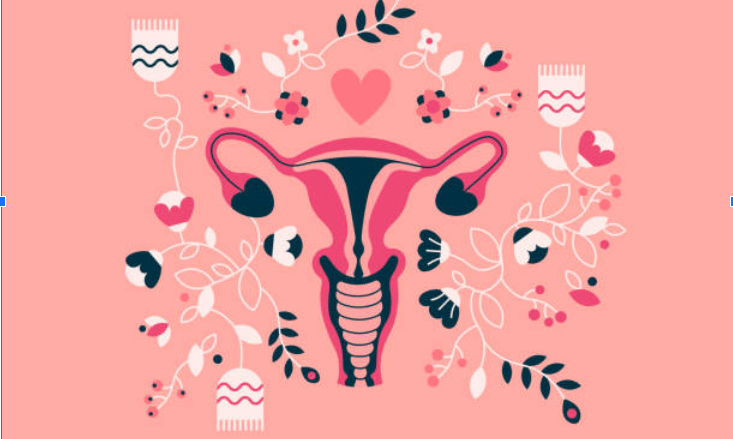
Menstruation Celebration poster- Photo by MyAQ


 The Saint