
By Anastasia Benstead, Assistant Editor-in-Chief

SOE calls attention to federally prohibited words – Photo by Anastasia Benstead
Last week the School of Education put up a bulletin board displaying the 250+ words that have been flagged by the Trump administration.
In Jan. 2025 President Trump signed an executive order to enact “the termination of all discriminatory programs, including illegal DEI and “diversity, equity, inclusion, and accessibility” (DEIA) mandates, policies, programs, preferences, and activities in the Federal Government.” The statement made by the White House also stipulates all programs with DEI initiatives but under variant names must also be terminated.
As declared by the White House, DEI has been deemed unconstitutional due to its “discriminatory” practices of favoring persons of color or minority demographics over “more qualified candidates.”
Words flagged by federal administrations does not inherently mean banned. After the executive order an ever growing list of words were prohibited and placed under review by the Trump Administration. Until federal approval is given, all such words, including ones like “women,” “disability” and “elderly” had to be removed from all internal and external facing documents, including federal websites, official documents and federally funded research.

Close up of some banned words, or topics which are vaguely defined – Photo by Anastasia Benstead
The New York Times released the initial list of prohibited words in March. As the list continues to grow several news outlets have continued to publish lists of flagged or banned words. The professors in Aquinas’ School of Education used Pen America’s list of 350+ words to create notecards to pin up on their SOE bulletin board.
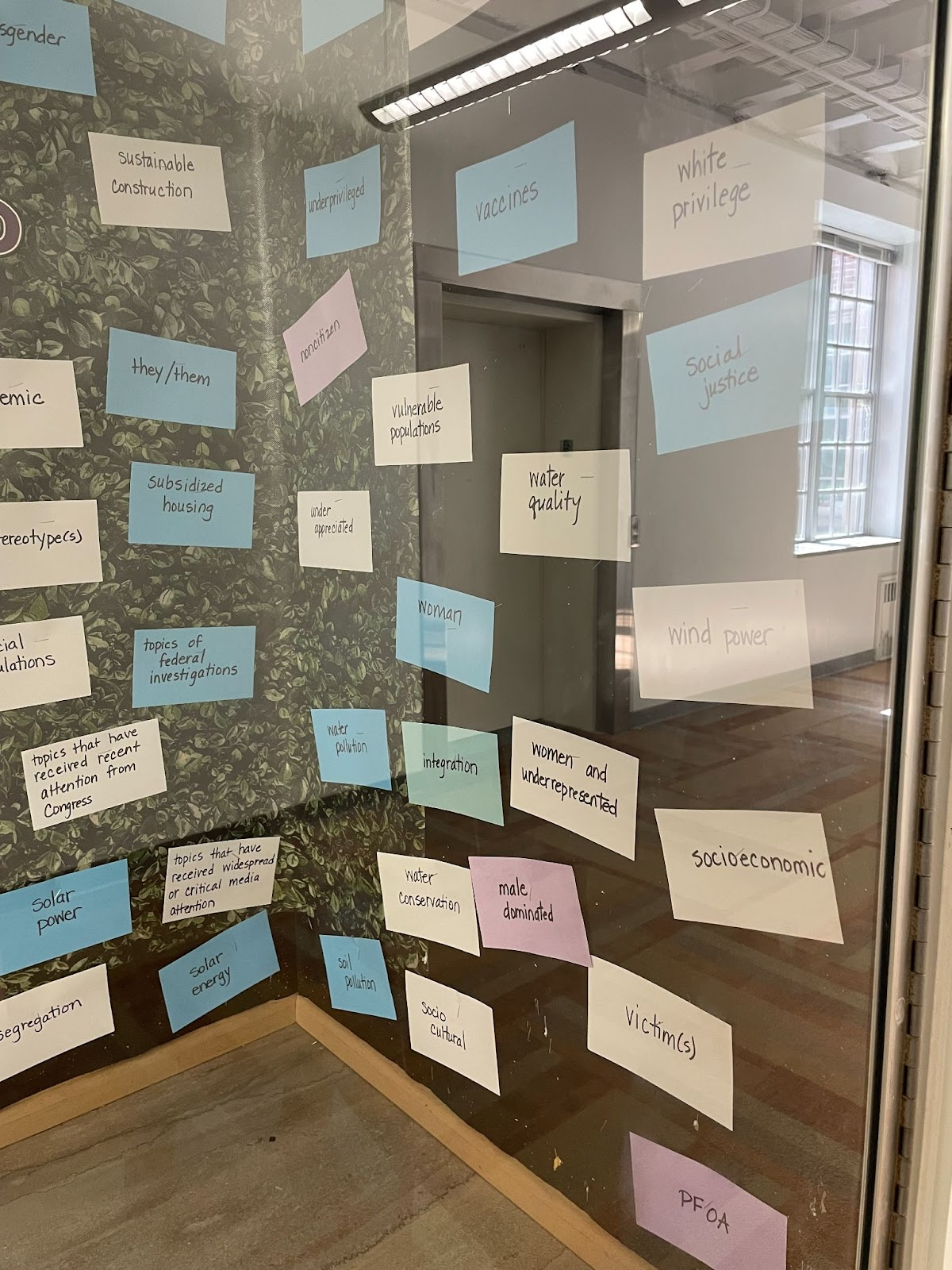
Women appear on the Prohibited Words List – Photo by Anastasia Benstead
“[Why these words are banned] should be questioned,” professor Amy Barto said. “Why are they flagged? In what context are they an issue? For example, there are concepts and words related to water which are included due to efforts to roll back many EPA restrictions so they do not block expansion of technology like AI.”
Aquinas prides itself on the liberal arts education it provides its students to think openly and be critical of new ideas. “We need to ask who or what is being erased when we decide to ban a word, phrase, or story,” Dr. Briana Asmus said. “Words represent ideas that should be explored, interrogated, critiqued, and discussed.”
For every word present on the list, it is also important to notice their absent counterparts. “The words female and woman are included yet male and man are not,” Barto said. “Or, the words Black, Latinx, Native American and Hispanic are included but White is not. While the current mandates do not technically ban these words in conversations, they are flagged with the intention of limiting how organizations, including schools, are able to address any type of difference or disparity in our communities.”
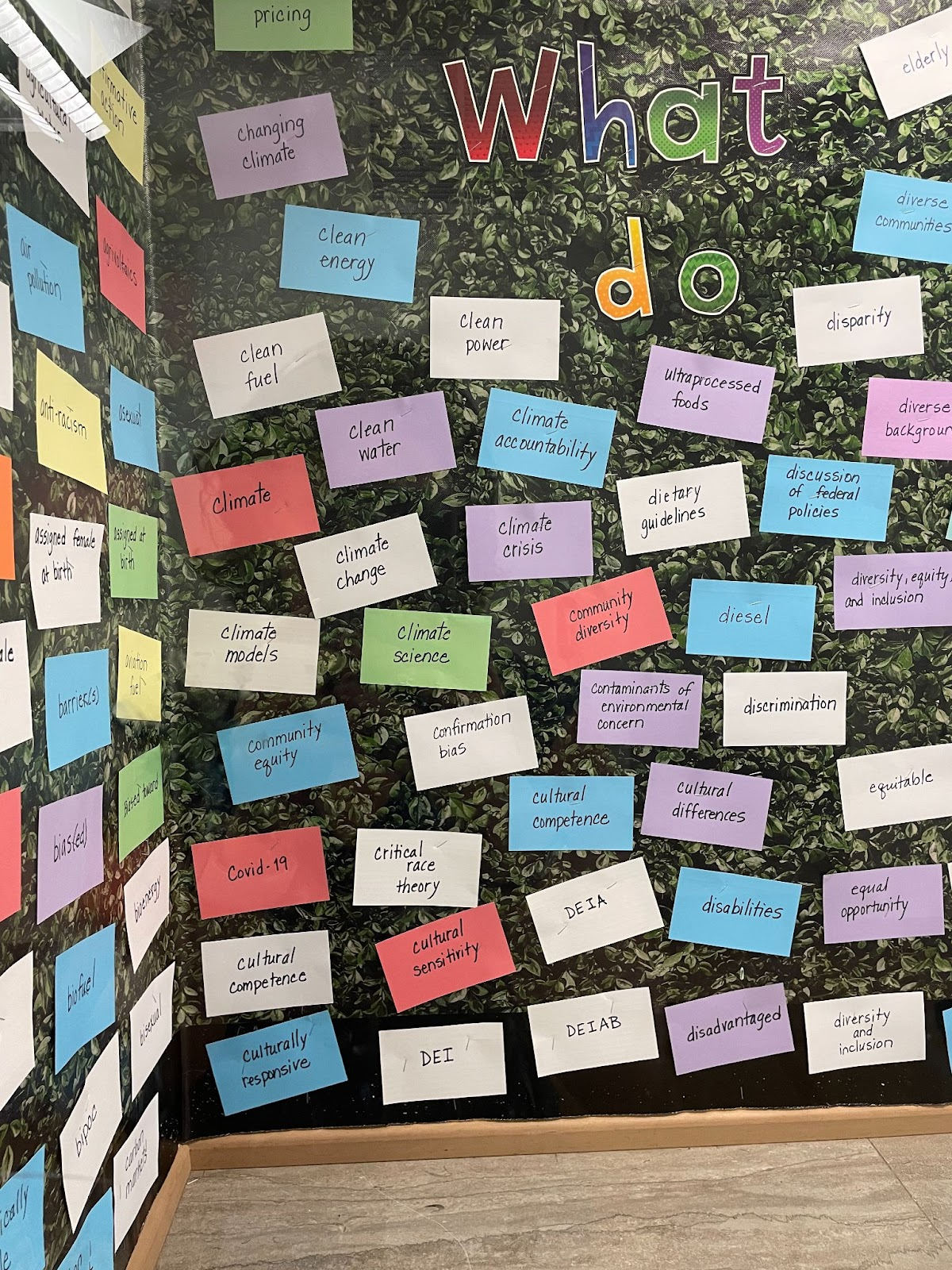
Climate action and related terms are federally censored – Photo by Anastasia Benstead
This level of censorship is counterintuitive to the first amendment rights of free speech, especially when non-problematic and common words are being banned from official publications.
“For example, the word community should not be on the list, ” education student Hailey Blackmore said. “It is the job of a teacher to create a healthy classroom community.
Other students have expressed their frustration as well. “The word inclusion,” education major Evie Spitzley said. “We are literally required to take an entire class titled diversity and inclusion.”
“Having dialogue around censorship is important for all of us–particularly for our education students who will work with children who come to us with diverse voices, experiences, and futures,” Dr. Stefani Boutelier said. “Our learning must be human-centered and open windows to inclusive conversations.”
The federal government deems all of these words harmful in some way, but the people truly being punished are the most vulnerable communities such as people of color, people with disabilities and those most at risk of climate injustice. Notably, in the White House’s official publication of the “Ending Radical And Wasteful Government DEI Programs And Preferencing” executive order the prohibited word of “discriminatory” appears in the first paragraph.
“Words give meaning to the individual and collective experience of humanity,” Asmus said. “By banning certain words we are letting those in power narrate and control our experience to suit their own purpose.”
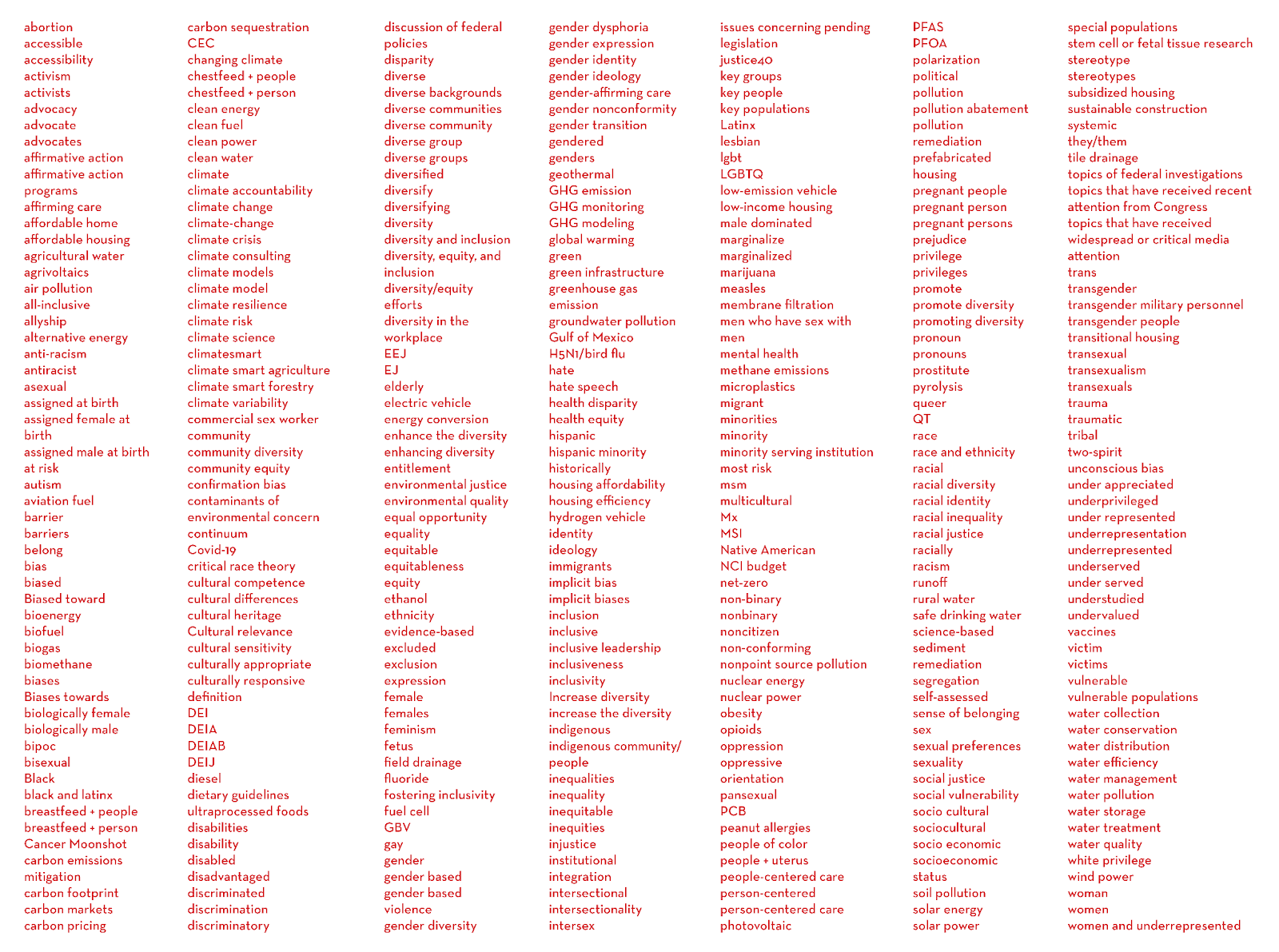
Prohibited Words List – Photo by Pen America
 The Saint