By Zoebelle Bean, Catholic editor
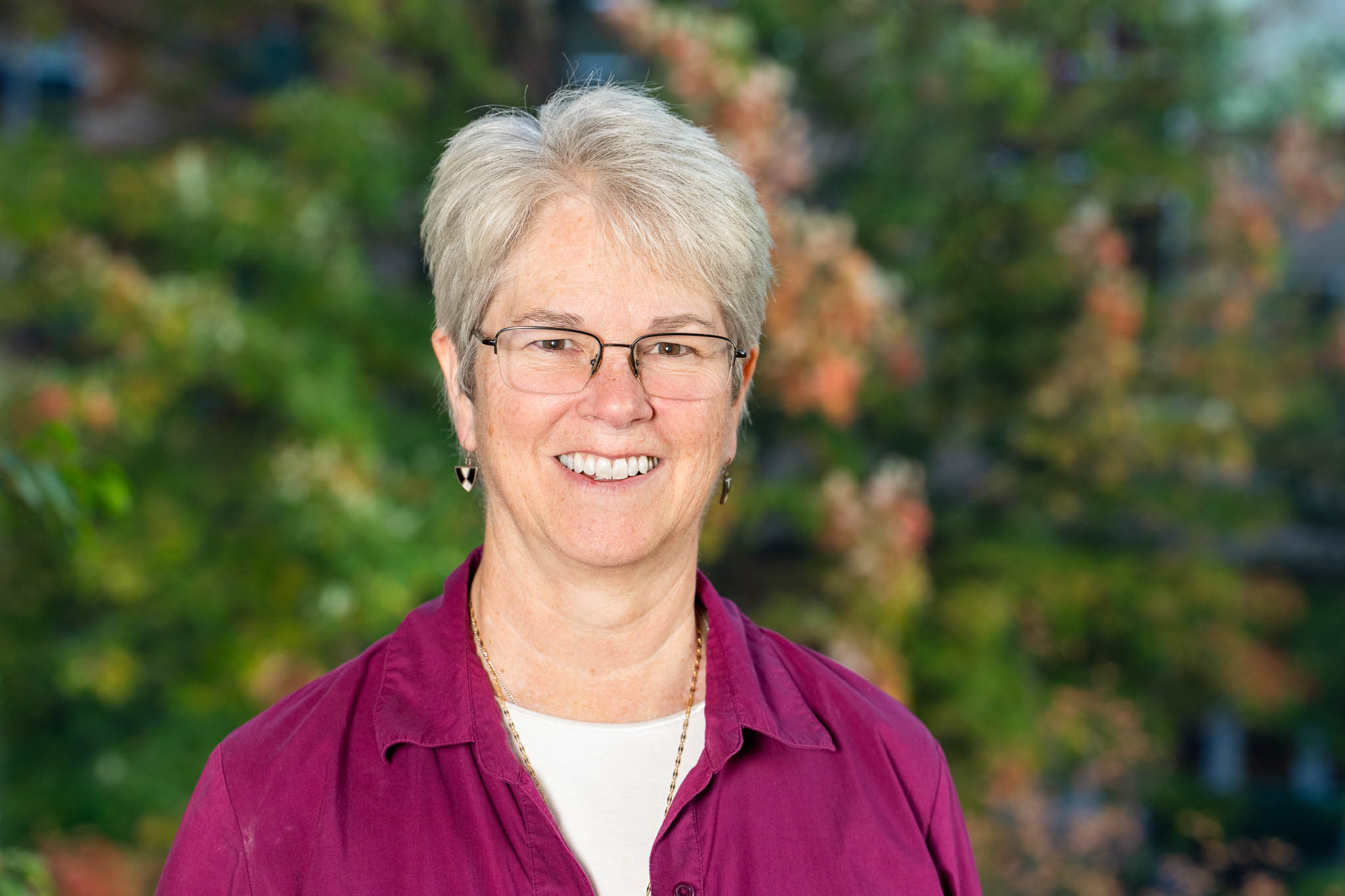
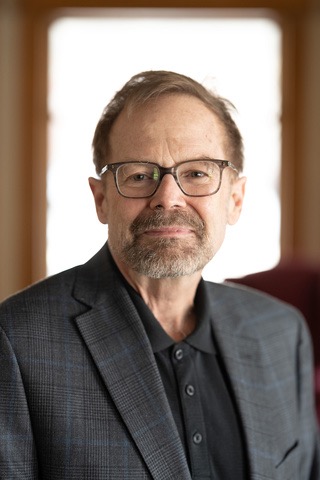
A headshot of Sister Megan McElroy – Photo by the Dominican Sisters of Marywood
Sr. Megan McElroy presented a speech titled, “Does Hope Really Have Feathers?” in the Donnelly Center on Thursday, Sept. 11.
A Dominican Sister since 1988, McElroy is an Aquinas College alumnae, earning her Bachelor’s degree from Aquinas and her Master’s degree from the Catholic Theological Union in Chicago, where Pope Leo XIV earned his Master’s. She presented as part of the Jubilee Lecture series hosted by Campus Ministry.
McElroy began by explaining that the premise of her speech came from 19th century poet, Emily Dickinson, and her poem that begins, “Hope is the thing with feathers.” McElroy’s goal was to use this premise to answer the question of, “How are we, as pilgrims, called to embody hope in today’s day and age?”
Emily Dickinson’s poem was an invitation to reimagine vulnerability as quiet strength. “Hope is an inner orientation of the human spirit… in the fall of formidable obstacles,” McElroy said. “What looks like a bird sheltering in the storm is actually strength.” She explained that in order to live out what hope is, others must also be the hope they wish to see.
McElroy’s talk was divided into five reflections on what she termed “storms.” The first storm was a political one, described as the aftermath of the attack on 9/11. As her talk fell on the anniversary of that event, she felt it prudent to remember how people reacted and felt on that day 24 years ago. This reflection began with her describing the dust of the collapsed towers, covering hope. “Where was God in the midst of this?” McElroy said.
According to McElroy, He was found in the first responders, those who helped everyone onsite, and especially Father Michael Judge who prayed last rites for those suffering in the tragedy before he himself was killed in the aftermath. God was also in the people donating blood, assisting stranded people, and nurses coming across the country to help the victims recover.
The second storm was a religious one. This reflection was about the Catholic Church’s sexual abuse scandal. “The Catholic Church’s own 9/11,” said McElroy. This scandal was publicized by the Boston Globe reports on cover-ups in the city in 2002. It was proliferated by the subsequent feelings of abandonment, shock, and dismay by the readers, leading to a lack of trust toward the Church. These feelings were intensely felt by priests who had never done this. “Why didn’t God do anything to prevent it from happening?” McElroy said.
The signs of hope from God were found in the response. McElroy led the crowd in a reflection on how child protection charters were created, review boards began to recruit more laity for diversification, and priests were held accountable for their actions. God was there to help the world recover.
The third storm was an environmental and literal one: Hurricane Katrina. Though hurricanes had been worse than this one, this was felt more on a personal level for all involved. “It was not the deadliest, but it was the costliest,” McElroy said. It was a sign of climate change, and had human, psychological, and practical consequences. It reinforced a need to take care of the environment. “What is the cost if we do or don’t change our ways?” McElroy said. “Where was God in this?”
McElroy claimed that collective responses are needed to avoid the implications of our actions if we don’t change. In these responses, God and hope are found. This was seen in Greta Thunberg’s actions and her efforts to curb climate change. It was also seen in the Dominican Sisters committing to returning land to Natives. It continues to grow through the late Pope Francis’ Laudato Si platform. In all of these, hope is found.

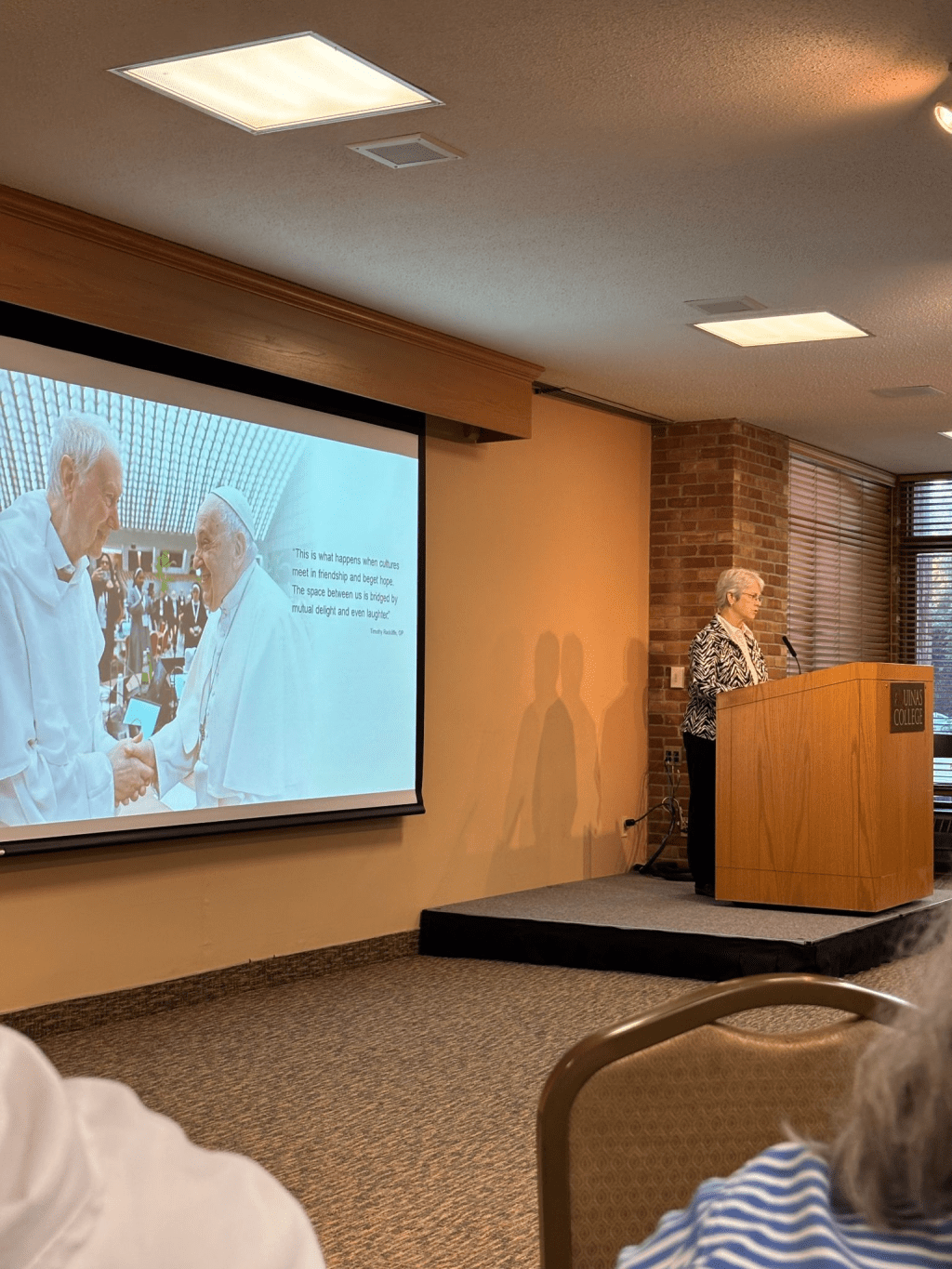
Sr. Megan McElroy presenting with Pope Francis on the screen – Photo by Zoebelle Bean
The fourth storm was a health one, centered around the effects of COVID-19. McElroy led the audience in a reflection on how the virus impacted every group of people. Mayo Clinic found higher than typical levels of stress in individuals after 2020. First responders were overloaded with patients, people had to say their last goodbyes to people over videocall, and online school became a necessity for all students and sometimes was hard to navigate. “What and whom do we believe amidst this?” McElroy said.
The answer was God, and His hope in the first responders who began to tend to each other in their hurt, in the hand-made masks, in the messages left on sidewalks and windows, in the notes of gratitude exchanged, and in the quarantined people of Italy playing music on balconies.
The fifth and final storm reflection was on cultural polarization. In today’s society, according to McElroy, people are less and less able to come together for debate. The other side is seen as the enemy, and thus diabolic in nature. People stay in communities, sheltered, to not be tainted by those with an opposing opinion. “Who are we called to be as a person in this time?” McElroy said.
According to her, the image and likeness of Jesus is the answer. Jesus brought together many people from very different backgrounds to be His disciples. Today, people should be able to do the same, and imitate His actions. Hope was found more concretely in Pope Francis’ Senate on Synodality, where 363 people gathered from all around the world and were intentionally seated at mixed tables to have mixed dialogue. Hope is also found in St. Thomas Aquinas’ words on the virtue of courage: “A willingness to do what is right despite obstacles or fear.”
McElroy left the audience with a reflection on how to physically show hope in the way people live. Jesus, suffering on the cross, is a reassurance to the community that it is not alone. He promises a life after this one, and that hope is what should sustain the community. “We hope because the story is not over yet,” McElroy said. All have received the spirit of God through this hope, and it empowers people to participate as a work of redemption. All can live out hope by living out this baptism and being the body of Christ, willing to face questions and storms as a community. “We may feel like we are looking for hope, but hope is really looking for us,” McElroy said.
 The Saint