
By John Petty, Catholic Editor
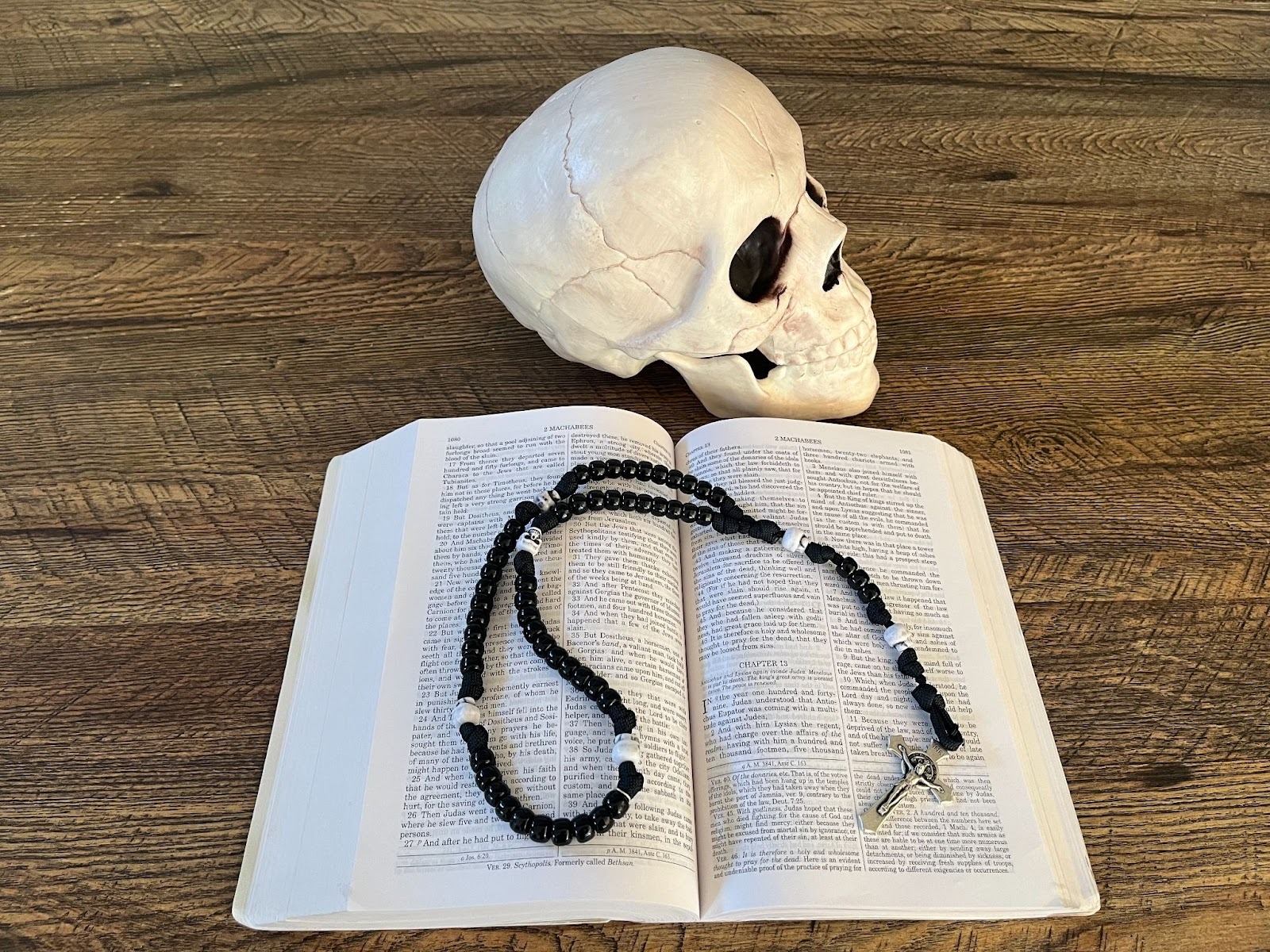
Memento Mori – Photo by John Petty
Every year with the coming of Fall, there seems to be simultaneous excitement regarding the imminent coming of the holiday season, beginning with Halloween.
Trick-or-treating, movies and simply wearing costumes, are just some examples of customary practices often associated with this particular day.

Hand full’a Haribo Gummies – Photo by John Petty
Interestingly, there are Catholic roots to this holiday. Though Halloween may bring to mind demons, the occult and other scary connotations, there is a deeper supernatural importance regarding its celebration rooted in sanctity.
In the Roman Catholic Church, Hallowtide is a series of three days, beginning with “All Hallows Eve” (The Eve of All Saints Day), All Saints Day and concluding with All Souls Day. Secularly, Halloween receives emphasis, while the other two are viewed as distinctly Christian. Nevertheless, Halloween itself is rooted in Catholic Eschatology and understanding of the Spiritual Realm.
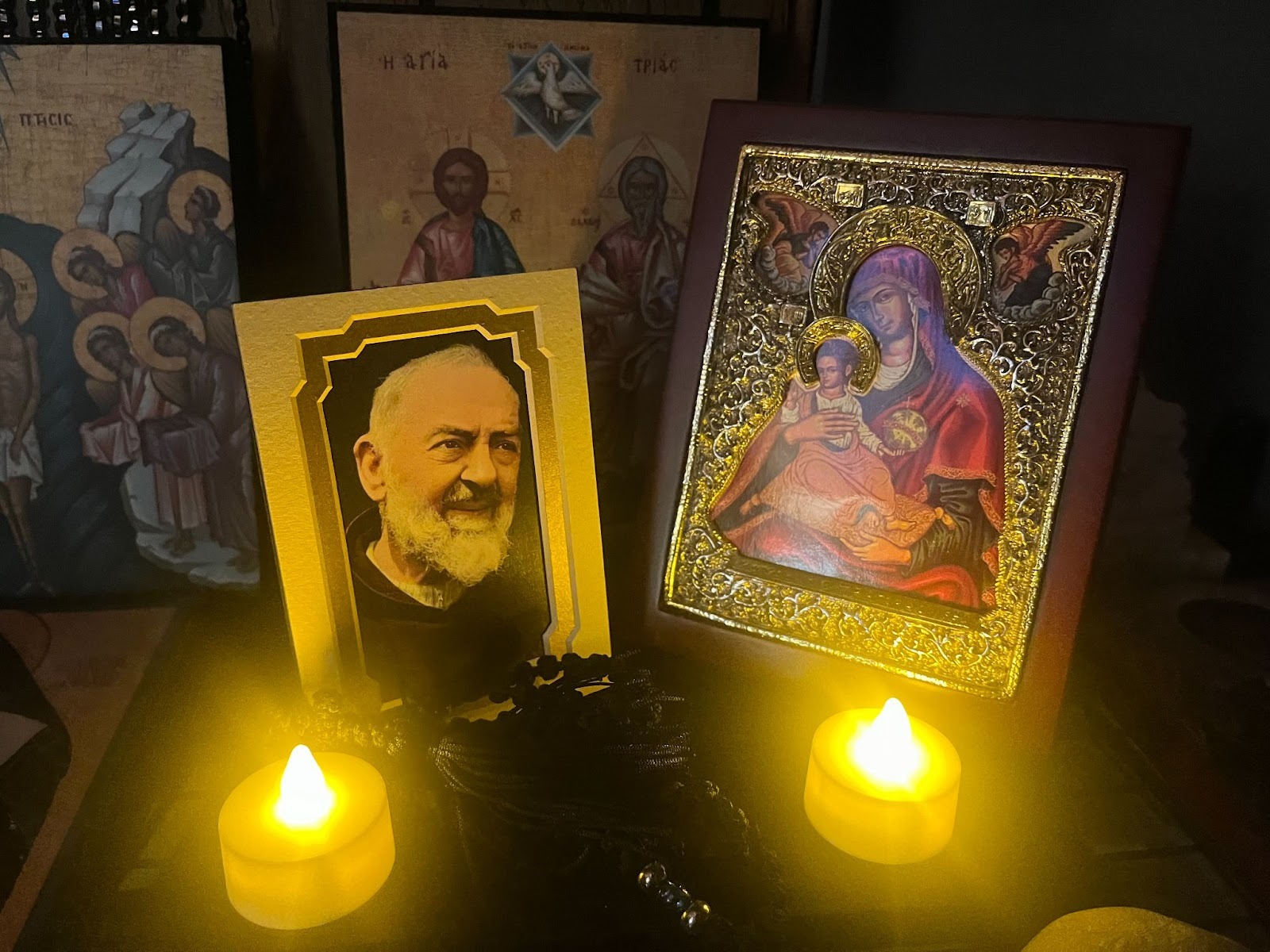
Catholic Prayer Table – Photo by John Petty
Halloween, also known as All Hallows Eve, is Oct. 31, the day before the feast of All Saints in the Roman Catholic Church. With the Liturgical Year coming to a close before the season of Advent, the feast of All Saints Day marks an increased focus on Eschatology (“The Last Things”), Heaven, Hell and Purgatory. Since the feast of Advent is specifically set apart for preparation for the Coming of Christ, this Feast Day is fittingly placed as it is beforehand, emphasizing the increased focus on “The Last Things” to come in anticipation of Advent.
Halloween comes from the word hallow, “which literally translates to set apart,” Professor of theology Dr. Stephen Davis said.
The Feast of All Saints celebrates the holy men and women who have been brought to Heavenly Paradise. The Saints are constantly interceding for the faithful, and serving as models of holiness for the Church on Earth. In light of these reasons, Nov. 1 is a Holy Day of Obligation, requiring all able Catholics of the Latin Rite without grave circumstances to attend Liturgy.
“As a recent convert to the Catholic Church I am still trying to grasp how important all of this really is,” said Junior Logan License. “But one thing I can tell you is that praying through the Saints work. [St. Joseph] is my guy.”
Lastly, the day after the Feast of All Saints is the Feast of All Souls. Similar to All Saints Day in remembering the dead, All Souls Day specifically is oriented toward those being cleansed of their sinful nature in Purgatory. The souls in Purgatory are guaranteed Heaven, but must undergo final purification before beholding God in the Beatific Vision. The specifics of time in relation to Purgatory remain relatively unclear. Nevertheless, it is certain that the prayers of the faithful on Earth can lessen a soul’s time of purification.
“The Catholic Church is always trying to get souls to heaven, and part of this mission entails the constant prayers for the poor souls who have deceased among us who we believe to be in purgatory,” said Senior Johnny Vanderbaan. “This tradition of praying for the dead began before the time of Christ, commonly referred to in 2 Maccabees in the Old Testament.”

Douay-Rheims, 2 Maccabbees 12:46 – Photo by John Petty
While Halloween is often celebrated as a commercial and secular holiday, the religious origins not only of this particular day, but also the subsequent days cannot be understated. The connotations of the holiday regarding all forms of divination (ouija boards, tarot cards, mediums, etc.) are prohibited by the Church, and hence Catholics participating in these occultic activities, would be gravely sinful, in accordance with the Catechism of the Catholic Church. According to the Catholic Church, the purpose of Hallowtide is for Catholics to celebrate the intercession of the Saints and the blessings of the Lord should be sought instead of customary secular traditions.

 The Saint