By Lauren Lyle, Aquinas Reporter and Anastasia Benstead, Assistant Editor-in-Chief
The government has been shut down since Oct. 1, meaning that it has been over a month since everything came to a standstill as Democrats and Republicans can not agree on a budget for the now current fiscal year.
Not all areas of the government are shut down, but roughly 1.4 million people are either on unpaid leave or still performing their very essential tasks without pay. One specific program that is on track to run out of funding within the week is the Supplemental Nutrition Assistance Program or SNAP. The Trump Administration has confirmed as of Nov. 3 that they would use contingency funds to cover at least 50 per cent of SNAP assistance as the shutdown continues after ruling from republican judge Jack McConnell stating that the government would not cease SNAP benefits .
This is a cause for concern for millions of Americans because they rely on food stamps that are provided by the SNAP to feed themselves, their families, and make ends meet. Freshman Caradee Lopresto said “The school has me on an account hold and I was denied food stamps and the health benefits I’m receiving are little to none.” She is worried about how she will be able to eat for the foreseeable future because her loans are not being processed and she is not receiving enough aid from the government.
The government shutdown is also affecting anyone receiving Section 8 benefits. Section 8 provides federal subsidies for low-income households renting privately owned property. As of November no more Section 8 vouchers will be issued and it is unclear if current vouchers will be suspended, potentially causing the eviction of many individuals.
Other areas that have been paused are government grants to schools and individuals or families, VA benefits, and medicare and medicaid have both been limited in what they can do for right now.
People who have VA benefits are also very concerned about the government shutdown because they are not receiving them. Hannah Latz, a freshman at Aquinas college, said “without those benefits I can’t help him,” speaking of her father, “pay for my schooling” stating that her primary concern is how she will be able to afford this college without the incoming money from the VA benefits.
Federal student loans are unlikely to be affected in the short term. While FAFSA is contingent on federal funding, the Department of Education is able to continue to approve student loans. Local and public schools however are now completely at the mercy of state funding, as the shutdown continues.
The government has been unable to reach a compromise on the topic of budgeting for 2026 with the senate voting unsuccessfully 13 times, all while most federal workers, military personnel, air traffic controllers and more are furloughed or working without pay. Since shutting down on Oct. 1, this U.S. approaches the longest shutdown in history. The first was during the first Trump Administration lasting 35 days.

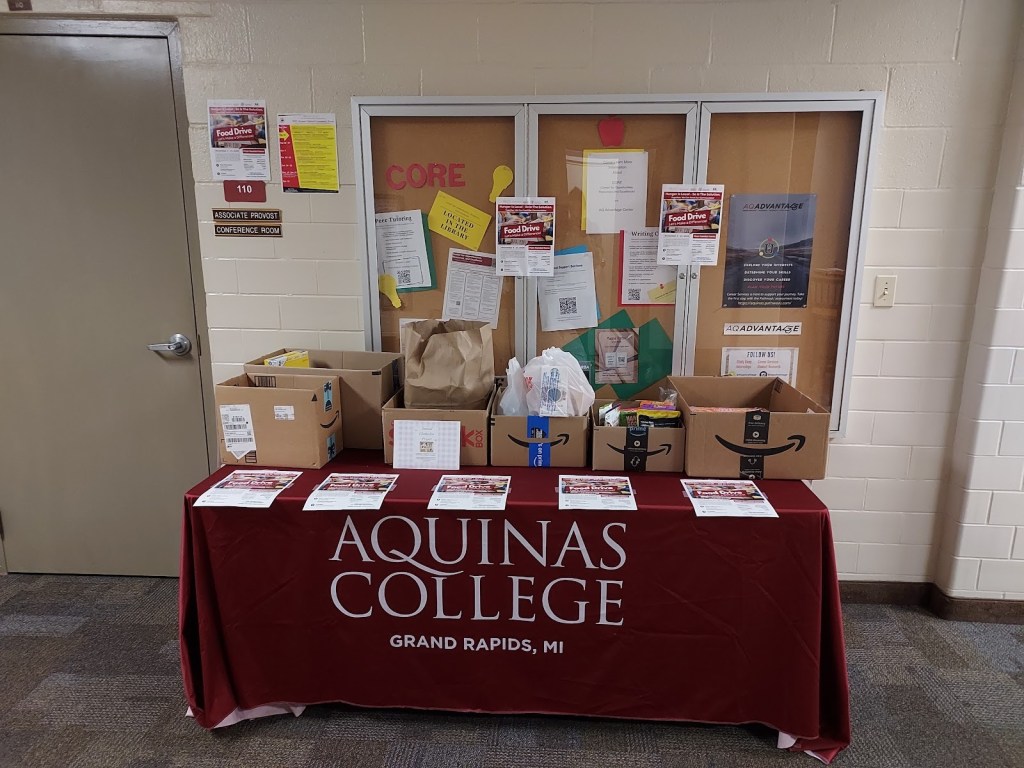
Food drive poster hosted by Aquinas in partnership with Feeding America, Dominican Sisters and Eastown Community Association – Photo by Aquinas SAO
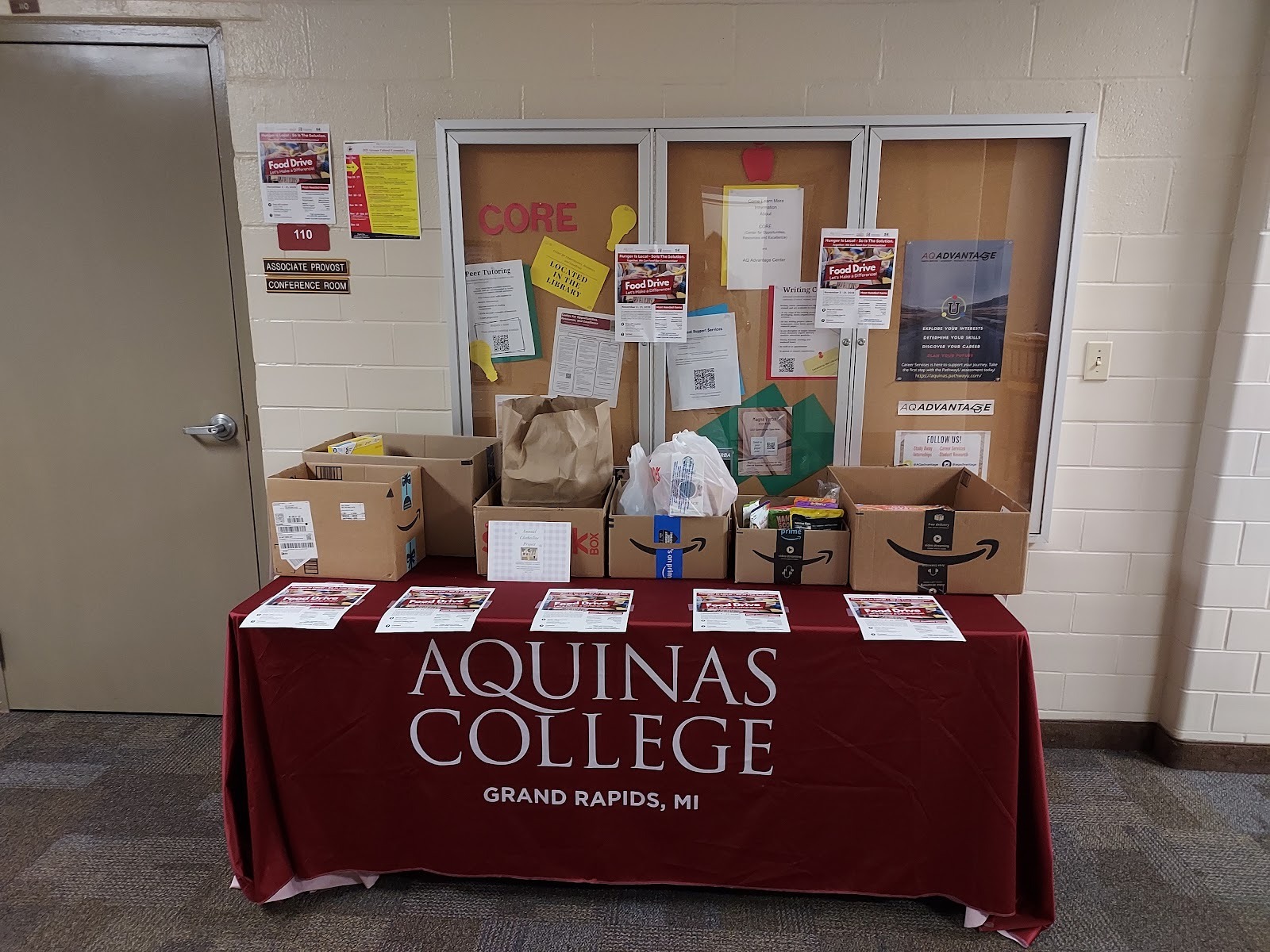
Food drive donation boxes on the first floor of the academic building – Photo by Lauren Lyle




 The Saint