By Evan Doan, News Editor
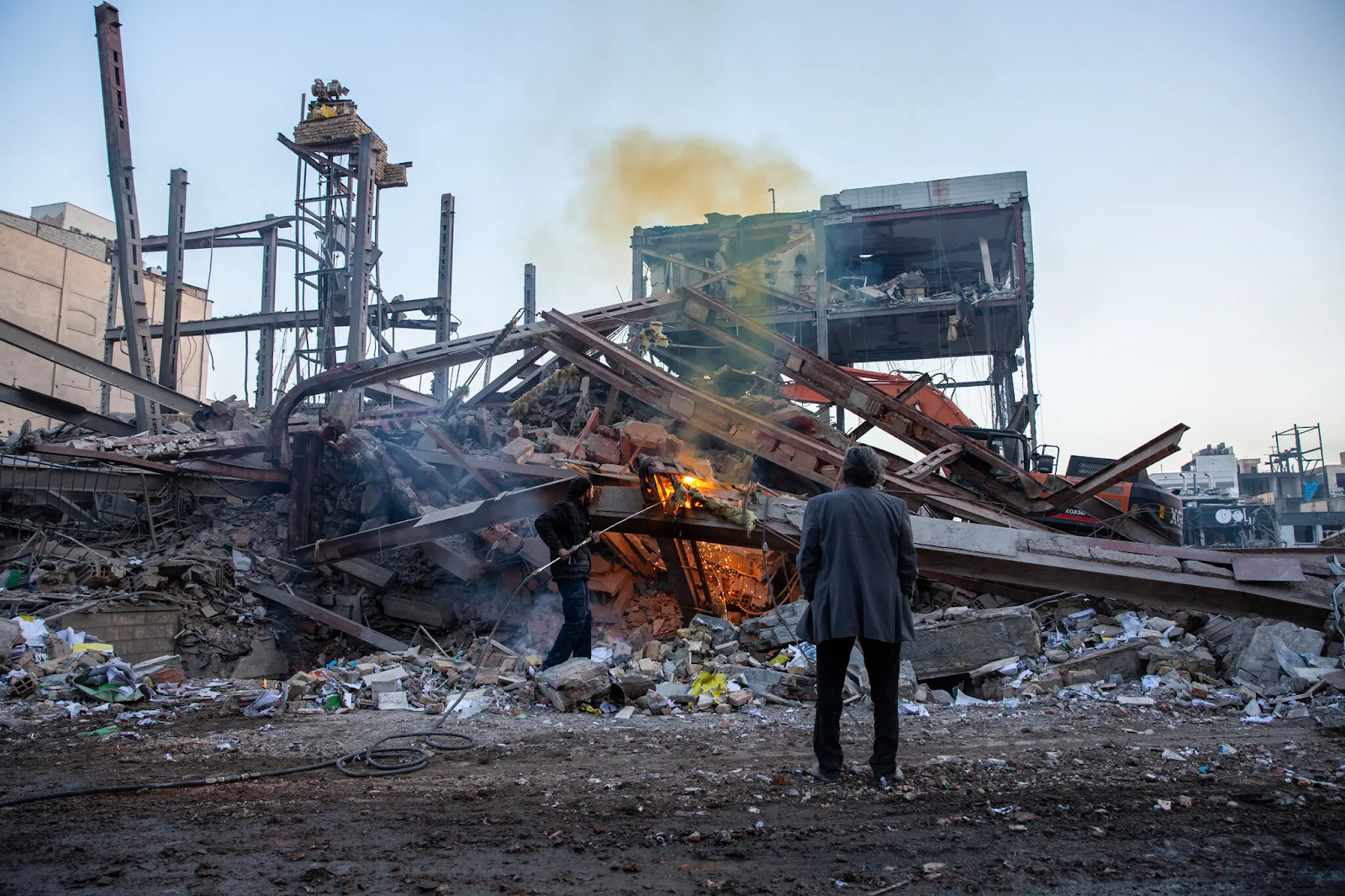
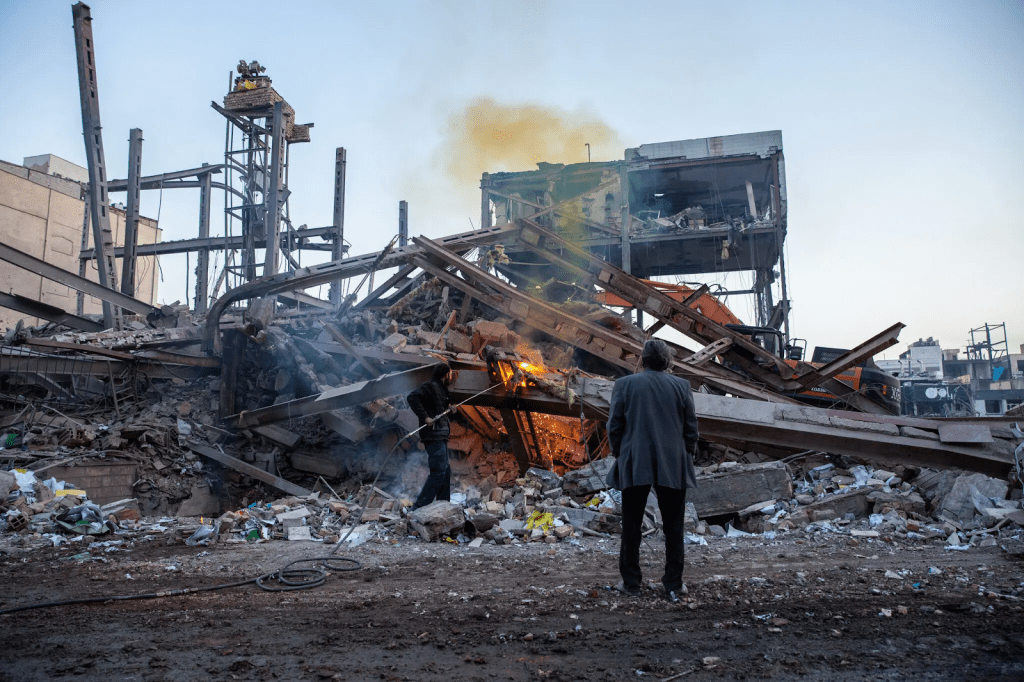
A worker in Tehran breaking down steal destroyed in airstrike – Photo by Arash Khamooshi for The New York Times
Feb. 28, 2026 Israel commenced airstrikes in Iran, with the United States joining shortly after, in what the countries called “major combat operations.” Dr. Roger Durham, has had to adjust some of his classes because of these recent developments.
“Monday the lesson plan went out the window,” said Durham, but the airstrike provided a lesson plan for him. Durham wanted his students to take three things away from the current events.
“[The airstrikes] are 100 percent illegal,” Durham said in class. The United States and Israel bilaterally violated Iran’s sovereignty with an official United Nations doctrine and directly broke articles 2.3 and 2.4 of the United Nations charter. President Trump bypassed Congressional approval by using the War Power Resolution Act of 1973, but broke international law by violating sovereignty with a UN coalition.
“While getting rid of authoritative leaders is good, the way you do it matters, and doing it unilaterally isn’t the way,” said Durham. “Iran’s Supreme Leader Ayatollah Ali Khamenei was an authoritarian that needed to be removed, but he needed to be removed democratically.”
President Trump removing Khamenei in this manner set a dangerous precedent for the international community about the balance of power and the strength of coalitions if more global superpowers start to act unilaterally.
Durham spoke about recognizing authoritative behavior and removing it democratically. Trump’s actions were authoritative because Congress was not allowed to provide a democratic approval before the strikes were carried out.
The last topic that Durham posed to his class was the idea of what makes a war a “just war.” War is illegal according to the United Nations and is only legitimately justifiable if in self-defence.
“Our objective is to defend the American people by eliminating imminent threats from the Iranian regime,” said President Trump on Feb. 28. “When [the U.S.] is finished, take[ing] over your government, it will be [the Iranian people’s] to take.”
A war to prevent a war and “state building”, using war to install a new government, were the reasons the U.S. used to start the Gulf War and the Iraq War, but are not justifiable under international law. The U.S. also had loose coalitions when taking those military actions unlike currently.
Durham’s Middle East Politics class already explored the long history of the United States’ conflict and intervention in Iran. In 1953, the Central Intelligence Agency, along with British Intelligence, organized a coup in Iran which overthrew a democratically elected Mohammed Mosaddeg in order to maintain their interests in Iranian oil.
The 1953 coup d’état helped sow the seeds that led to the 1979 Islamic Revolution in Iran which saw the “de-westernization” of the country and the removal of United States intervention in the country. The revolution saw women lose many human rights and guarantees as the country returned to Sharia law.

Iranian students in the 1970s – photo by The Independent UK
During the 1980s Iran and Iraq would go to war over land disputes. Saddam Hussein, the leader of Iraq, looked to exploit post revolution Iran. During the conflict, Iran struck Kuwaiti oil tankers raising global gas prices. The U.S. launched Operation Praying Mantis which destroyed roughly half of Iran’s functional navy in eight hours.
The Middle East would remain in tension in the 1990s when Saddam Hussein ordered Iraqi troops to invade Kuwait starting the Persian Gulf War. Iran chose to stay neutral in the war, opposing both the Iraqi invasion of Kuwait and the United States presence in the region.
After the Gulf War the United States created the “Dual Containment Policy.” The Clinton administration sought to isolate both Iran and Iraq for their support of terrorism and their active opposition to American interests in the region. In 1995 the US would bolster its containment of Iran.
In 2003 the US invaded Iraq in response to the Sept. 11 attacks and the claim that Iraq possessed “weapons of mass destruction” and posed an imminent threat to the American people. It was a war to prevent a war that would last nearly a decade and would continue to destabilize the region.
In 2020 President Trump ordered the drone strike that killed Qasem Soleimani, Iran’s top military commander, marking a prior major direct escalation.
The airstrikes provided a current geopolitical crisis that Durham’s class was able to explore as it developed while also comparing and analyzing the past history between the U.S. government and Iran.




 The Saint