By John Petty, Catholic Editor
At his elevation, Robert Prevost–now known as Pope Leo XIV–has made history as the first ever American to ascend to the Chair of Peter. A member of the Order of Saint Augustine, he has already made a name for himself and his papacy in many respects, including his encyclical on the theology of artificial intelligence.
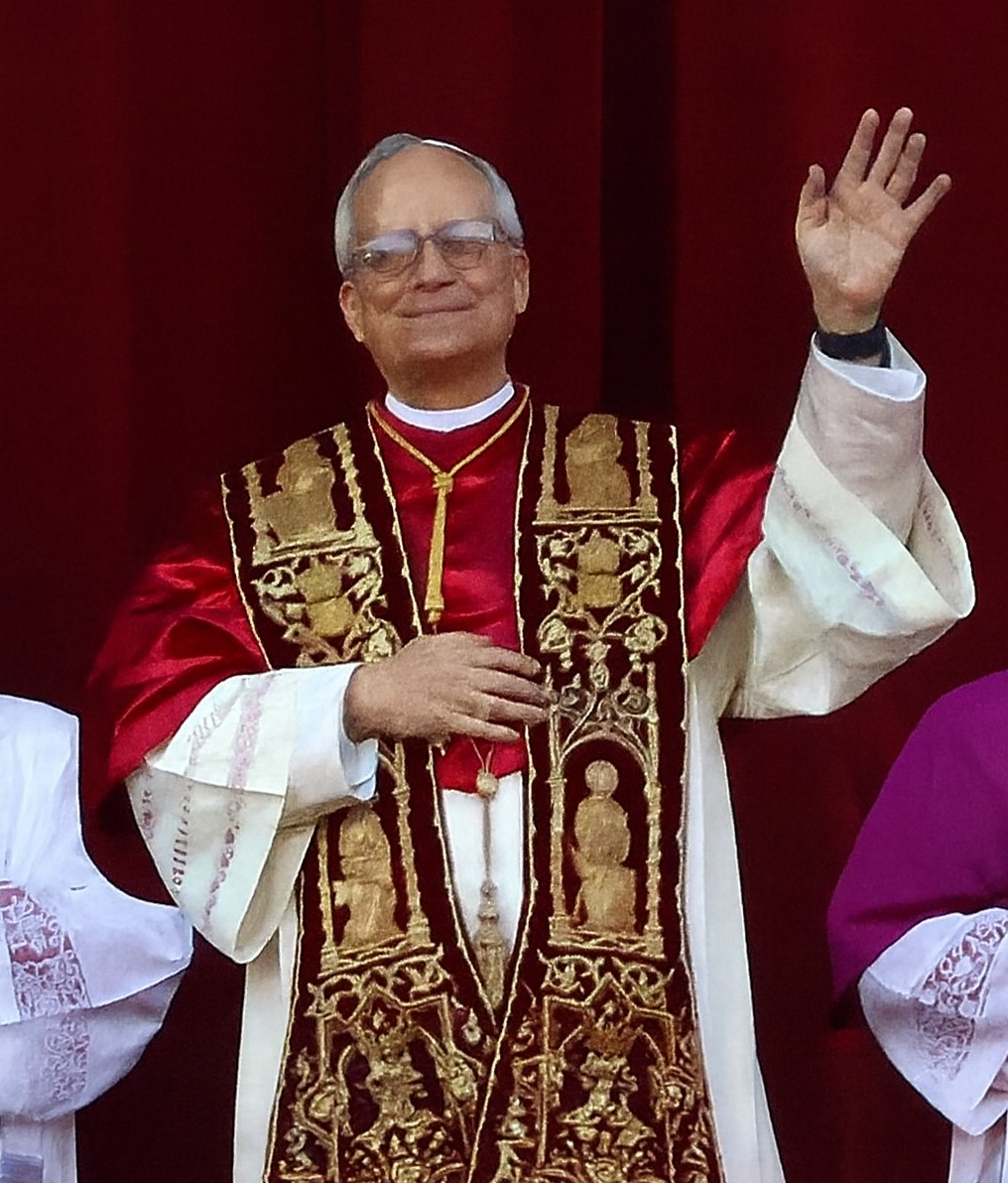
Pope Leo XIV – Photo by wikicommons
On May 25, 2026, the Vatican released the first encyclical penned under Pope Leo’s name: Magnifica Humanitas (Magnificent Humanity). The encyclical pertained to the evolving world of technology, in particular relation to the ethical considerations of artificial intelligence and its spread across the world.
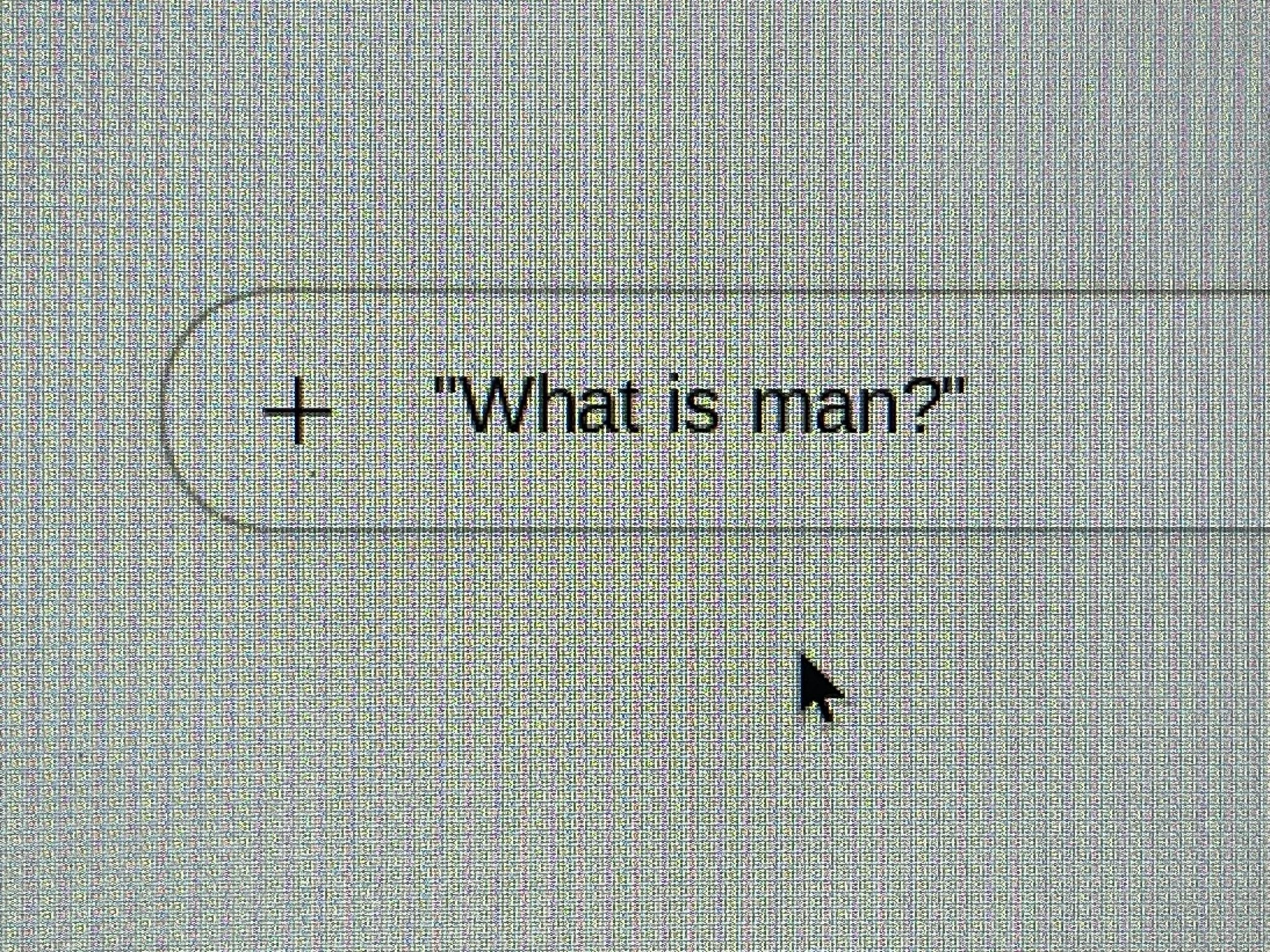
Asking Gemini a question – Photo by John Petty
Many draw connections between one of Pope Leo XIV’s predecessors: Pope Leo XIII. Leo XIII published Rerum Novarum during the Second Industrial Revolution, responding to the rapid social and economic changes that came along with it. Rerum Novarum emphasized that technology and economic progress, while amoral in themselves, must be used responsibly taking into account the dignity of workers as human persons.
As of the fall 2026 semester, Aquinas College has added artificial intelligence based majors to the course catalog, allowing prospective students to devote their college education to familiarization with this rapidly evolving technology.
In the field of education, educators find significant issues with the usage of artificial intelligence in and out of the classroom. Academic dishonesty and decrease in critical thinking skills are the two most common concerns at large. Some professors are relatively comfortable with AI, provided that it is used according to their course guidelines. Other professors prohibit the usage of AI altogether. It often varies based on the professor and the coursework. Nevertheless, educators are struggling to keep up with the advancement of such technology, for AI detectors are only so reliable.
Furthermore, the environmental and demographic controversies surrounding data centers necessary for the operation of artificial intelligence has become increasingly controversial in the United States.
Altogether, the Church and society as a whole are facing significant ethical questions that come with this new and advancing technology. Many argue that artificial intelligence will bring humanity to “the next level,” much like the First and Second Industrial Revolutions.
Theological anthropology is at the heart of these ethical questions. In Catholic Christianity, man is understood as made in the imago Dei (image of God), thus, man cannot be treated in any less of a way, for man is not a thing. Man is not made in the image of the algorithm, but in the image of God. Man is not determined by his function, but by his nature. For this reason, any technological advancement must cautiously keep this framework in mind, so that human dignity is not hindered, for it is necessary that the common good is kept at the heart of consideration.
“Humans constitute a soul which is by its very existence our essence and transcendence. AI cannot be transcendent; it has no intrinsic existence outside of the media,” Fr. Robert Keller, O.P., Adjunct Professor of Theology said. “AI has no purpose for itself; humans do (happiness, communion with God). Human thought and willing[ness] give to AI its purpose and its fulfillment, because AI serves human needs/wants.”
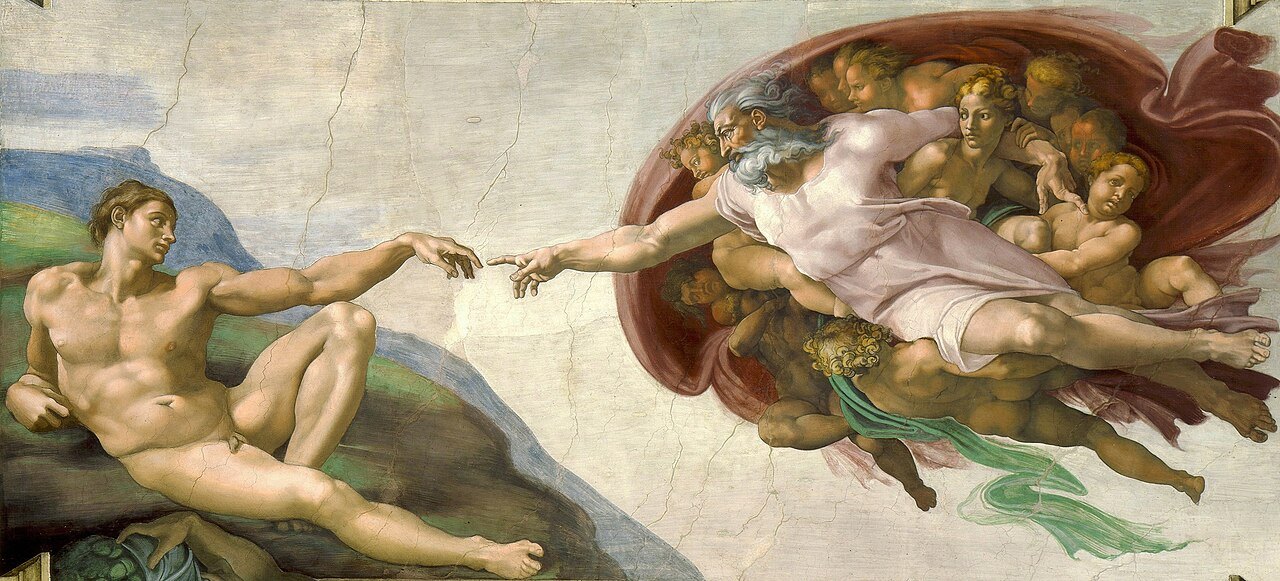
The Creation of Adam by Michaelangelo in the Sistine Chapel – Photo by wikipedia
Man, part of being made in the image of God with a rational soul, possesses an intellect and will. Hence, humanity is magnificent in this respect. Man can ponder the wonders of the stars, the questions of the universe and so on and so forth. An animal or a plant cannot, nor can even a great machine.
One of the key points of the encyclical is found at the very beginning, where Pope Leo warns against the temptation to create a “new Tower of Babel.” Instead, Pope Leo hopes, man will choose to create a city “in which God and humanity dwell together.” An Augustinian at heart, Pope Leo’s words draw back to St. Augustine’s famous City of God, where Augustine contrasts the earthly City of Man with the heavenly City of God.
The Tower of Babel in the Old Testament was a story in which men, trying to “build up” to God, began constructing a tower in hopes of reaching the heavens. However–God seeing their pride–scrammbled their languages before they could finish, indeed, saving them from further great sins of pride.
So too, humanity is faced with moral decision making on a large scale; is man using AI for the greater glory of God, or for the advancement of self-gratification at the expense of dignity? This question is more than rhetorical, for it necessitates an answer.
In short, Magnifica Humanitas posits that artificial intelligence—while amoral in itself and even a contingent good—must be approached with great caution in light of human dignity and the common good. The environmental, practical and moral questions that come with advancements in AI and other technologies will continue to unravel, and remain so far unanswered.