By John Petty, Catholic Editor
Every Oct., the Catholic Church recognizes Respect Life Month, continually emphasizing the human dignity of the human person made in the image of God.
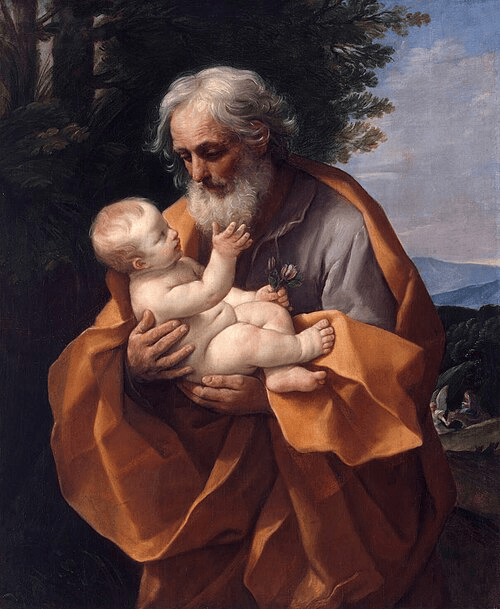
St. Joseph and the Infant Jesus – Photo by Wikipedia
The Catholic Church regards all human persons as being made in the imago Dei (image of God), with an intellect capable of knowing, and a will capable of choosing. It is by virtue of being made in God’s image that all innocent human persons are recognized as having the right to life.
In modern cultures all around the world, abortion and euthanasia continue to be hotly debated topics, in the realm of morality and politics. It is important to keep in mind that the Catholic Church is neither conservative or liberal; She is orthodox. In light of this orthodoxy, the Church sets the month of Oct. apart in recognition of the rights of all innocent persons: the unborn and the dying included.
The Church is scorned as unpopular—among other things—for Her stance on abortion. Since the first century of the Church’s existence, She has always held abortion to be an absolute moral evil, and a grave sin against the dignity of the human person. This is evident in the Didache, one of the Church’s earliest catechetical documents.

The Didache – Photo by Wikipedia
Interestingly, in pagan Rome, infanticide was not unheard of. The Romans would sometimes neglect newborns to be left for death, and it was often the early Christians who would rescue these children and raise them as their own. In light of this example from the earliest followers of Christ, the Church continues to this day to providing resources and care for children and mothers found in dire circumstances.
Fighting for the rights of unborn children, the Church likewise fights for the rights of the elderly and the sick, who are often offered euthanasia as a means to “end their suffering.” This practice, however well intentioned it may be, is nevertheless a rejection of the inherent right to life given by God to all people.
Both of these infringements on human life–again however well intentioned they are–nevertheless are to be utterly rejected by the Catholic faithful as grave evils. St. Thomas Aquinas’ theology is held by the Church: “the ends do not justify the means.”
Modern society is very utilitarian in regards to the dignity ascribed to personhood, focusing on what persons can do instead of what they are. The Greek philosopher Aristotle distinguishes between ousia (essence) and accidents (non-essential attributes). Modern society tends to view personhood and the dignity that comes with it as based on what human beings can do. Rationality, viability, etc. are some standards of modern personhood that are brought up in the context of debates surrounding life issues. However, these various ‘functionalist’ criteria for personhood hinge upon conflating essences and accidents, attempting to define the essence of personhood by the accidents of personhood, failing to make the distinction. A bird is not a feathered organism that is flying, but that which by nature is feathered and may fly. Notice the distinction between the accident (flying) and the nature (that which can fly). Similarly, it is irrational to define a person based on accidental functions/dispositions (consciousness, viability, etc.), as that does not define the essence of personhood itself. In the traditional Western understanding following Boethius, a person is “an individual substance of a rational nature.” In this sense of personhood, the unborn clearly qualify.
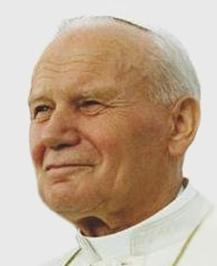
St. John Paul II – Photo by Wikipedia
Pope John Paul II published Evangelium Vitae, a papal encyclical written in light of an ever darkening ‘culture of death’ encompassing the Western world in particular.
In recognition of Respect Life Month, Catholic Churches continue to promote resources to pregnant and postpartum mothers. Furthermore, Catholics often can be found praying in front of abortion clinics and supporting organizations such as 40-Days for Life.
It is important to remember that the Catholic Church has compassion for post-abortive mothers and fathers, emphasizing mercy and compassion, while still acknowledging abortion as a grave evil. Part of the Church fighting against the grievous errors of modern culture necessitates individual efforts that begin with each person, then the family, the parish, the Diocese and then the Church at the national level. Through such efforts, Catholics may positively advance the culture of life, and simultaneously, the Gospel of Jesus Christ.