By Nevaeh Porter, Arts Editor
On Tuesday, Oct. 20 NAfME had a speaker come in and talk with students about grad school and teaching in music education.
This past Tuesday, NAfME had their first ever event. It was an event where they had guest speaker Gabrielle Cotter. Cotter came in to speak with them, give them insight on life after undergrad, what running their own program could look like, grad school, things to keep in mind and held a mini question and answer session.
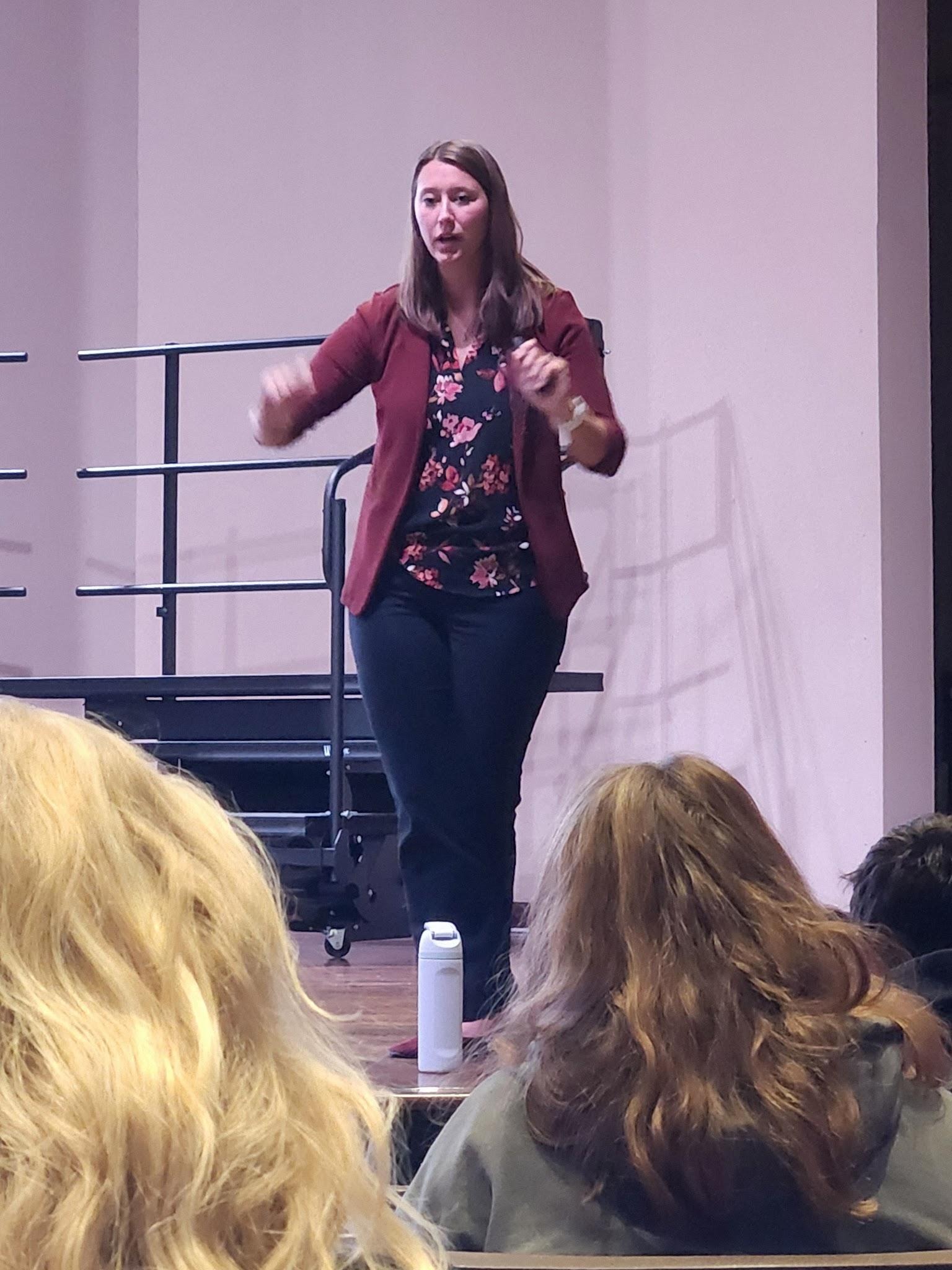
Cotter giving her opening statements – Photo by Nevaeh Porter
Cotter first talked about experiences after her undergrad and about what was needed when teaching students. She had a co-teaching experience and recommended that to the NAfME students. You and another teacher are splitting the work and working together as a cohesive unit to help your students. They always tried to stay at the same pace because they never wanted half of the class to be farther ahead of the other. They always had tests on the same days, they made their materials line up the same way content wise, but may have each taught it a little differently.
One of the next things she mentioned was how it was important to set and explain daily procedures at the beginning of the year. These are day-to-day activities and the expectations must be clear, concise and consistent.
She mentioned roses and thorns next. The roses are the beauties of teaching and something great from the day, while the thorns are the ugly and something terrible. Sometimes the thorns can be administrative challenges, but the roses can be the students and the parents you get to work with from day to day.
“There will always be days when you’re frustrated and question why am I doing this,” Cotter said. “You just have to remember the roses. There will always be more roses than thorns.”
Cotter then started talking to the students about band and orchestra and teaching in low income schools. When teaching band and orchestra, educators should ensure that they take the time to ensure their students know and understand their fundamentals. Sometimes they create habits that they’ve been doing for a long time that can hinder their playing, so they need to find a way to break those habits. It may take a while for the habits to break, but that’s okay. Educators also need to make sure they know simple fixes like fixing a small part on an instrument, having spare small parts and being able to fix stuck instruments. She also recommended that they take all of the notes and videos in their tech classes to be able to set their students up for success. She mentioned that if they end up teaching different grade levels, then their teaching paces for each level may be different, but that would be okay. She used the example of a you wouldn’t teach a fifth grader using the vocabulary that you would for a high schooler.
When talking about low income schools, she advised the students to apply for any grant that they can. There was one year where a grant provided her music program with reeds for a year, so any woodwind player that needed a reed didn’t have to go out and buy them theirselves. Grants can help out quite a bit. She also advised that they keep old technique books, that way if a student loses theirs, they can borrow one, or if there’s something they need to or want to work on, there’s a technique book that they can look at for help. She also mentioned that when choosing uniforms for concerts and other performances to make sure that they keep them easy and affordable for families. She talked a bit about fundraisers and to see what the school they are placed at allows because the profits from those fundraisers can go a long way.
When talking about low income schools, she also mentioned how there might be an increase in the number of IEP and 504 plans. Some of the students may have a delay of social or emotional development, but that’s okay. It’s about taking each day one step at a time and getting to know your students, making those connections. She also mentioned how they might get a student who tries to tell them everything that they did well that day. She said that it’s okay to be that listening ear for that kid if they have no one else who will listen. They may begin to look up to you as your whole world. She also emphasized making sure daily procedures are consistent because that’s what discipline comes back to.
Cotter talked to the students about self-care. She told them to make sure that they took care of themselves and to set boundaries. To set when to stop working times, if something isn’t urgent, then save it for the next day. She told them to make sure they had something outside of their career so they could have something to do to relax.
“How can we give our students 100% when we are not mentally and physically at 100%?” Cotter said.
Cotter then got into what the decision to go for another degree was like. She said that making the decision is such a hard one to make because of the relationships you develop with the students and the progress you see when you make the music program your own. She advised them to keep in mind what’s best for them, what they want to do, what they want to be called, where they want to live and what will be best for their future. She told them that when they prepare to apply for grad school, they should save any papers that they write because some applications will want to see examples of their academic writing. She also suggested they record videos of themselves teaching because while they serve the purpose of being used for applications, they can help the educators see what they need to work on. She told them to make sure they are applying for the right reasons and doing what is best for them.
Cotter at the end of her presentation told the students to keep playing their instruments. Not just for a demonstration for students, but to keep listening and playing the music and finding others to play music with.
“When you’re feeling down, take 20 minutes, pick up your instrument, and play it, fall in love with your instruments again,” Cotter said.
The students got a chance at the end to ask Cotter questions. NAfME President Shawni Thelen asked, “If you could go back to a version of you that was contemplating getting her masters, what’s one thing you would tell her?”
“I think I would tell her you have to do it for you,” Cotter answered.
Music education student Amelia Huysentruyt asked, “Why are your masters in conducting and not music ed?”
“For a while I was going back and forth because I love music ed, but I love conducting. I see conducting as art,” Cotter answered. “When I’m conducting, I feel like I’m creating art with my hands and my baton and it’s just beautiful.”
Cotter spent an hour with the students, gave them insight on what they could do with the futures in music education, gave the non-music majors there some tips for applying to grad school and gave them all one last phrase to hang on to.
“You are a musician, don’t forget that,” Cotter said.
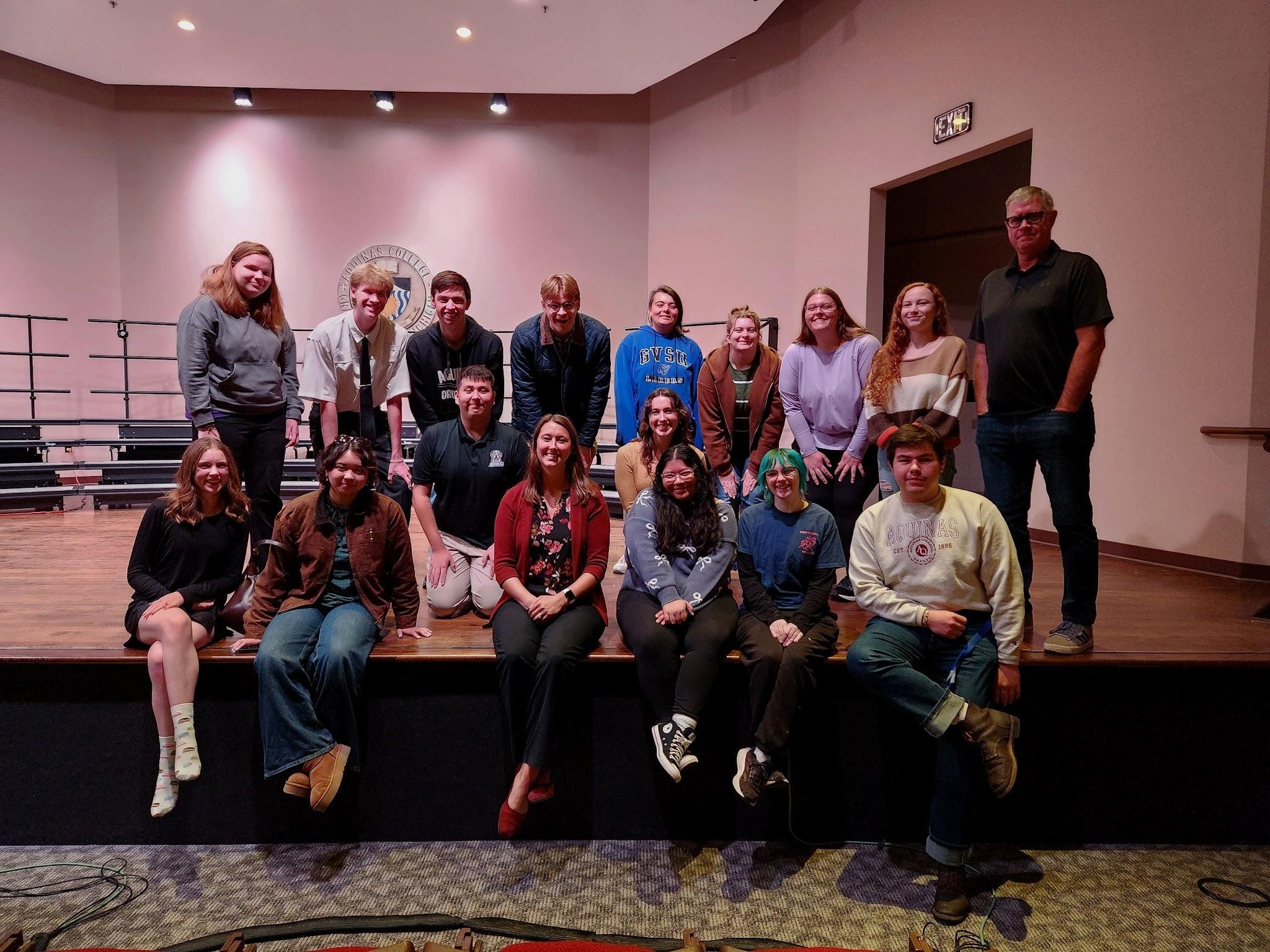
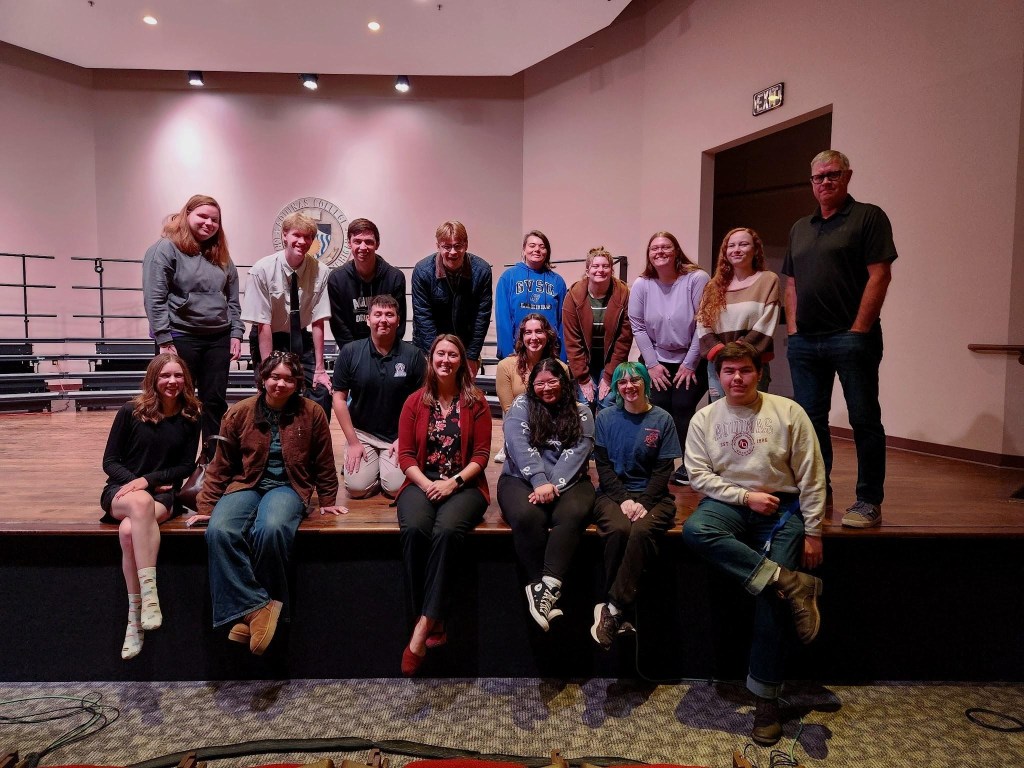
Group picture with Cotter, Advisor Ted Craig and NAfME members – Photo by Nevaeh Porter
NAfME has their next meeting Thursday Oct. 22 at 1 p.m. in the Arts and Music Building.