By Matthew Sloan, Reporter
The Aquinas College Center for Sustainability has made a point to emphasize plastic bags must not be put into the recycling bins around campus. This is the latest announcement in the continually-evolving waste-sorting process on campus as part of the Center’s Zero Waste Initiative. Plastic bags have been an issue lately following a change in acceptance policy from the recycling plant that takes the college’s materials. Now, plastic bags are considered contamination in the recycling stream.
“Contamination is a serious threat to Aquinas College’s recycling program,” Jen Howell, director of the Center for Sustainability said. “When trash, food waste or plastic bags end up in recycling dumpsters, they can compromise the materials collected and jeopardize our ability to maintain recycling services with our local hauler.”
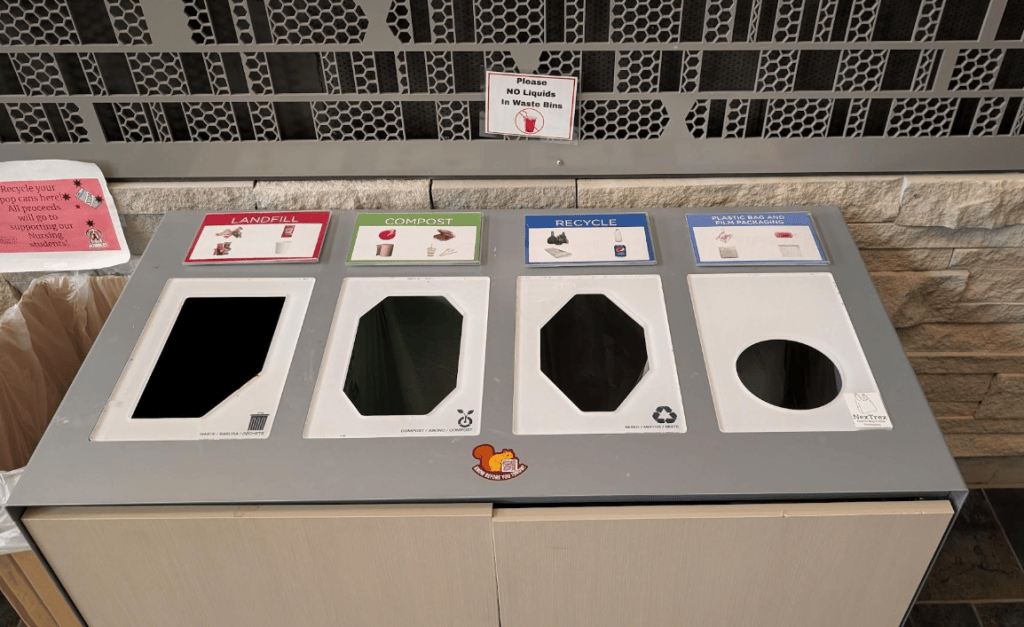
Even so, the Center for Sustainability does offer an alternative method for diverting plastic grocery bags and other thin, stretchy plastics from the landfill. NexTrex or “Plastic Bag and Film Packaging” bins are located around campus, new this fall 2026 semester.
Although NexTrex is new at Aquinas, the Center for Sustainability has existed here since 2005 with most of that time under the direction of the Center’s former director, Jessica Eimer Bowen. The Center for Sustainability is guided by the values of the college’s Dominican founders, Peter Wege’s Economocology concept, and Pope Francis’s Laudato Si’ encyclical. Howell has been in the position for less than a year after it remained vacant for more than a semester. Howell seeks to build off the foundation laid by her predecessor as well as guide the Center with her own experience and background to “create opportunities for people to develop a meaningful connection with the natural world around them.”
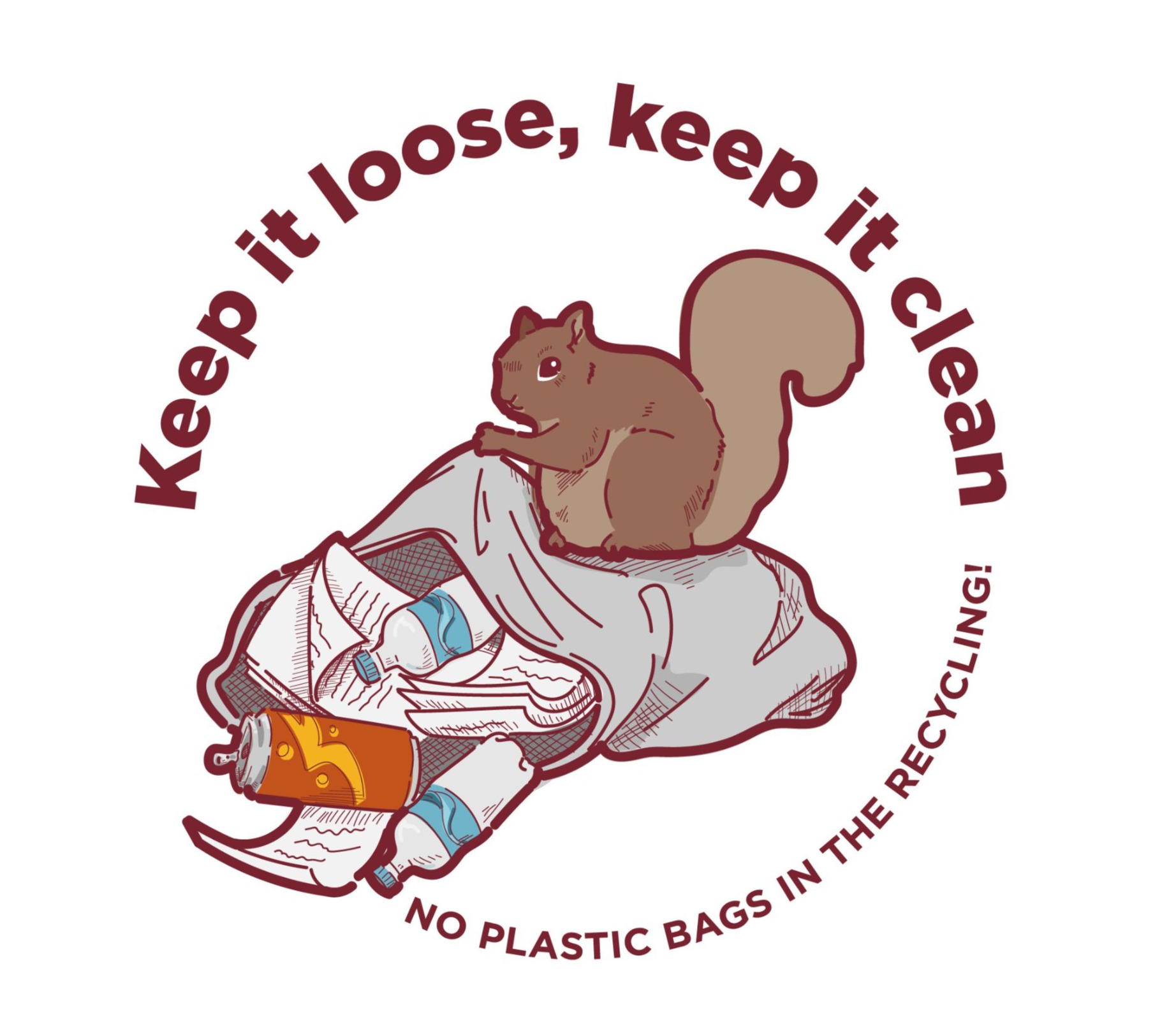
Since taking over, Howell describes the single biggest challenge as convincing people to change their ingrained habits in favor of more sustainable choices. “I’m sympathetic that recycling and composting may be new experiences for many of our community members,” Howell said. “That’s exactly why we introduced our sustainability ambassador, Sustainable Squirrel—to offer friendly, gentle reminders to pause at waste stations and Know Before You Throw.” The Sustainable Squirrel can be spotted around campus on stickers, shirts and social media. The Squirrel’s latest message, “Keep it loose, keep it clean. No plastic bags in the recycling” seeks to tackle the most pressing issue. Accompanying the Sustainable Squirrel at each waste-sorting station on campus is a QR code for the comprehensive waste-sorting guide. The guide provides images and lists of items that can be placed in each of the main waste streams, as well as the special collection bins around campus.
Howell stresses that it takes the commitment of the entire community to ensure the recycling program, as well as the Center’s other sustainability initiatives, can continue. The little changes in behavior, like sorting waste, can add up and make a big impact. “For many of us, myself included, change can be hard,” Howell said. “But it’s also necessary if we hope to create a healthier, more just, and more sustainable future.”
Students interested in learning more about sustainability, getting involved or making suggestions are encouraged to reach out via email to sustainability@aquinas.edu, on Instagram at @aq_sustainability or to come by AH129.