By Nolan Ostrowski, News Editor
Disclaimer: sensitive topics are discussed in the article including topics such as rape, drug abuse, alcohol abuse and sexual assault.
On Sept. 16, 2026, a woman identified by the alias Jane Doe filed a lawsuit alleging she was gang raped at a Cornell University fraternity house.
The alleged incident occurred on the evening of Oct. 19, 2024 and the morning of Oct. 20 at Cornell’s Chi Phi fraternity house. Doe claims that defendants Matthew Ingalls, Jonathan Newell, Winston Lee, Gillio Lopes, Diego Sarabia, Scott Norris and Scott Kretzschmar performed one or more criminal sex acts on her.
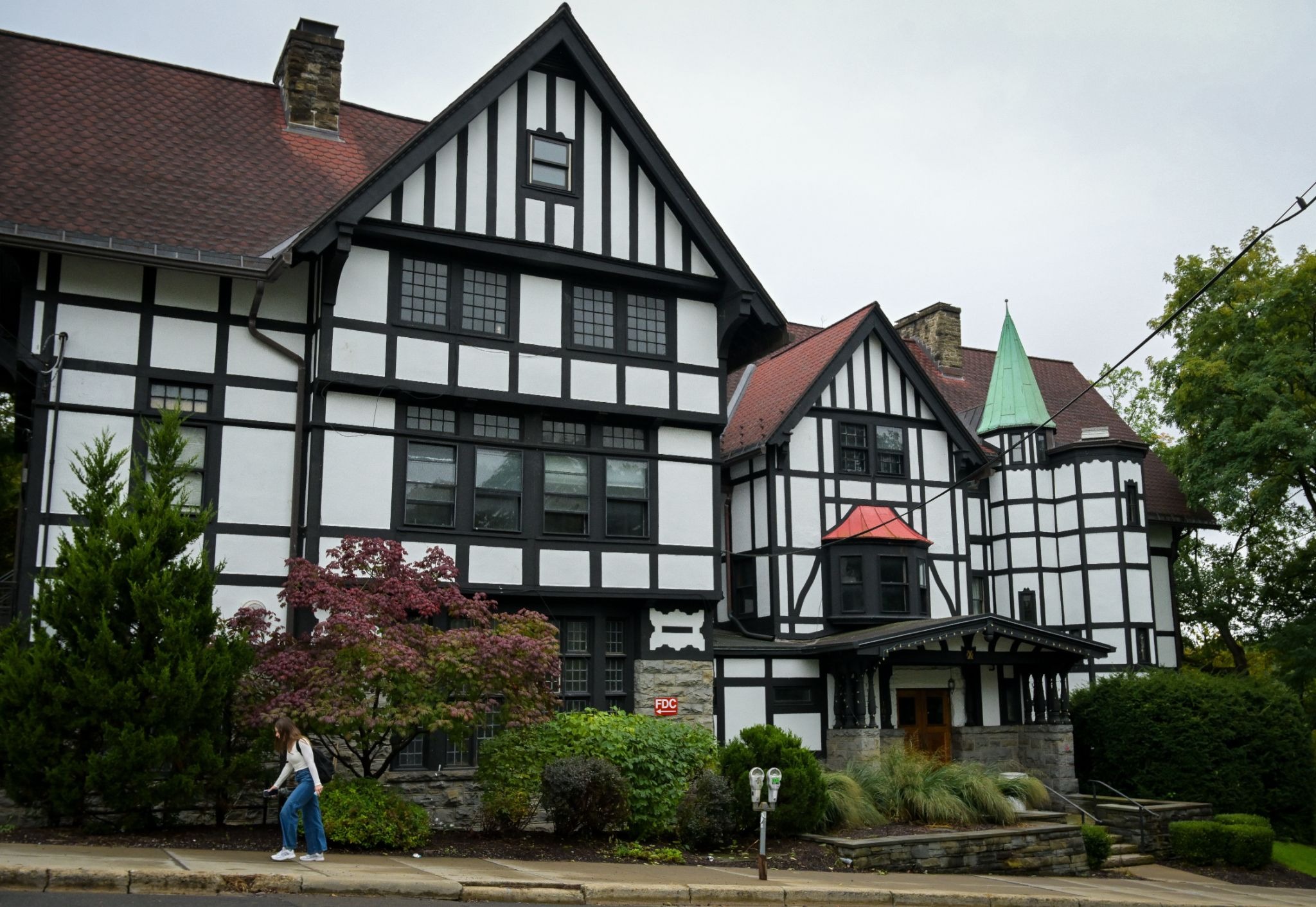
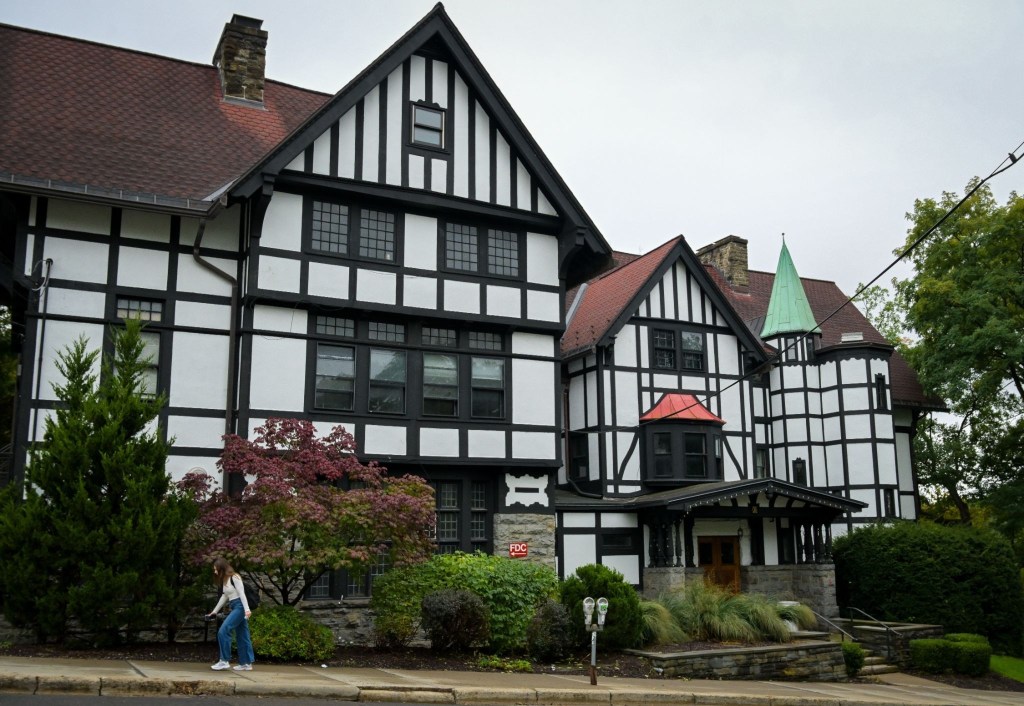
Chi Phi Fraternity House – Photo by NPR
In her lawsuit, the plaintiff says that she visited the Chi Phi fraternity house on Cornell’s campus to hang out with defendant Ingalls while she was intoxicated. She then claims that defendants Ingalls and Newell pressured her to take a substance they said was ketamine before both they raped her. She continues, saying that after defendant Ingalls decided to take a nap, defendant Lopes entered the room and another round of assault commenced involving both defendants Lopes and Newell at the same time. At 1:42 a.m., Defendant Newell allegedly sent a message to Chi Phi’s Snapchat group saying there was “free pussy” in reference to the plaintiff, encouraging other members of the fraternity to join the gang rape.
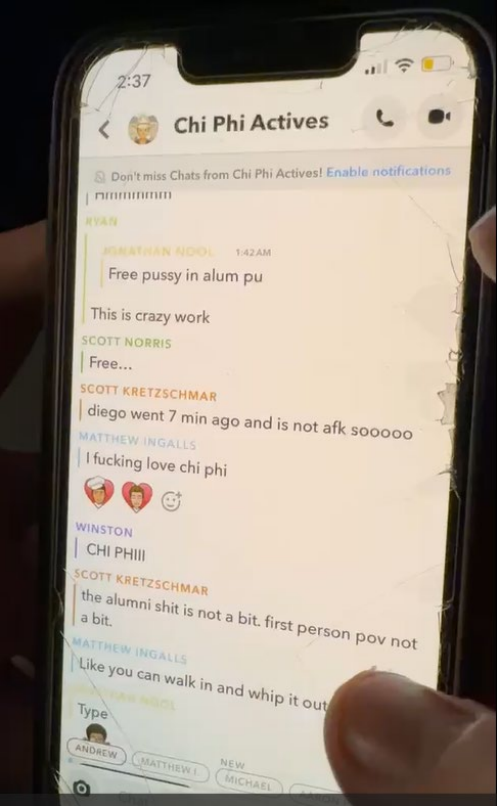
Chi Phi’s Snapchat Group Chat the morning of Oct. 20, 2024 – Photo from Jane Doe’s lawsuit
After this message, Doe says that multiple fraternity members entered the room and performed various criminal sex acts, including forcibly kissing her (defendant Sarabia), repeatedly groping her and commanding her to snort ketamine off his erect penis (defendant Newell), and snorting ketamine off her body (Defendants Ingalls, Newell, Lee, Lopes, Sarabia, Norris and Kretzschmar). She then alleges that defendants Ingalls and Lee told her to snort more ketamine they made, causing her to be completely incapacitated, and then assaulted her until 5:45 a.m. on Oct. 20.
In addition to the seven named Chi Phi members, Cornell University, multiple Chi Phi and Delta Delta Delta organizations, a bar, and multiple named and unnamed individuals are among those sued for varying charges.
Student journalism on Cornell’s campus has reported on this story for nearly two years and is still continuing to do so as the case receives national attention. On Sept. 21, 2026, The Cornell Daily Sun, Cornell University’s independent student newspaper, published an editorial titled “Cornell Won’t, We Will.” It was written by Editor-in-chief Sophia Dasser, Associate Editor Sophia Romanov Imber and Opinion Editors Zara Cheek and Rayen Zhou. The editorial opens with names of the defendants, and explicitly criticizes the university for its handling of the alleged rape: “Cornell has failed to protect its students…Cornell has failed the student allegedly raped by those seven men at Chi Phi in October 2024. Cornell has failed her. Cornell has failed us.” It concludes with a message to the defendants: “To Matthew Ingalls, Jonathan Newell, Winston Lee, Gillio Lopes, Diego Sarabia, Scott Norris and Scott Kretzschmar: We know who you are and we refuse to let you benefit from this University’s concealment.”
Senior Editor Ceerse Qusba had first revealed the names of the defendants three days before in an article reporting on the lawsuit filed by Jane Doe. Qusba has followed this story for nearly two years. She began to investigate the story back in 2024; getting into contact with Jane Doe and covering all the updates in the Daily Sun as new information emerged.
This event has sparked nationwide conversation about sexual assault on college campuses and college policies around sexual assault.
Aquinas College itself is obliged to follow Title IX in relation to allegations of sexual misconduct. Kevin Kwiatkoski, the Assistant Dean of Students and Title IX coordinator at Aquinas college, explained: “Title IX is actually a federal law. It started back in the seventies and it was related to athletics. But it’s kind of evolved… into more of a sex based discrimination for sexual harassment, sexual violence, domestic violence, dating violence, stalking, pregancy.”
Kwiatkoski also went through an example of how the law would be applied in a hypothetical scenario: “Let’s say a staff member reports it- that someone reported it to them. Ok so the first step would be I would get that report. I would look at that report and then I would…make sure we have the correct information. Once I have that I will reach out to the complainant with a Title IX reach out letter that basically says that I’m here for you. I will send this in an electronic form of services we provide for them, support, anywhere we can help them basically… Then they will respond to me, a lot of times meet with me, and then we kinda determine the path of where to go from there.”
When asked what he would advise to someone who had experienced sexual misconduct, Kwiatkoski said “I think that what I would highly advise is that they should know that the college is here for them, that we are here to listen to them, that we are not here to judge, we’re here to help them through the process.”
According to the Rape, Abuse & Incest National Network (RAINN), 1 in 8 students experience sexual violence during college. This translates in 1 in 4 undergrad women and 1 in 14 undergrad men.